
Pet Care
Pet Enrichment Ideas: 15 Simple Ways to Keep Your Dog or Cat Mentally Stimulated
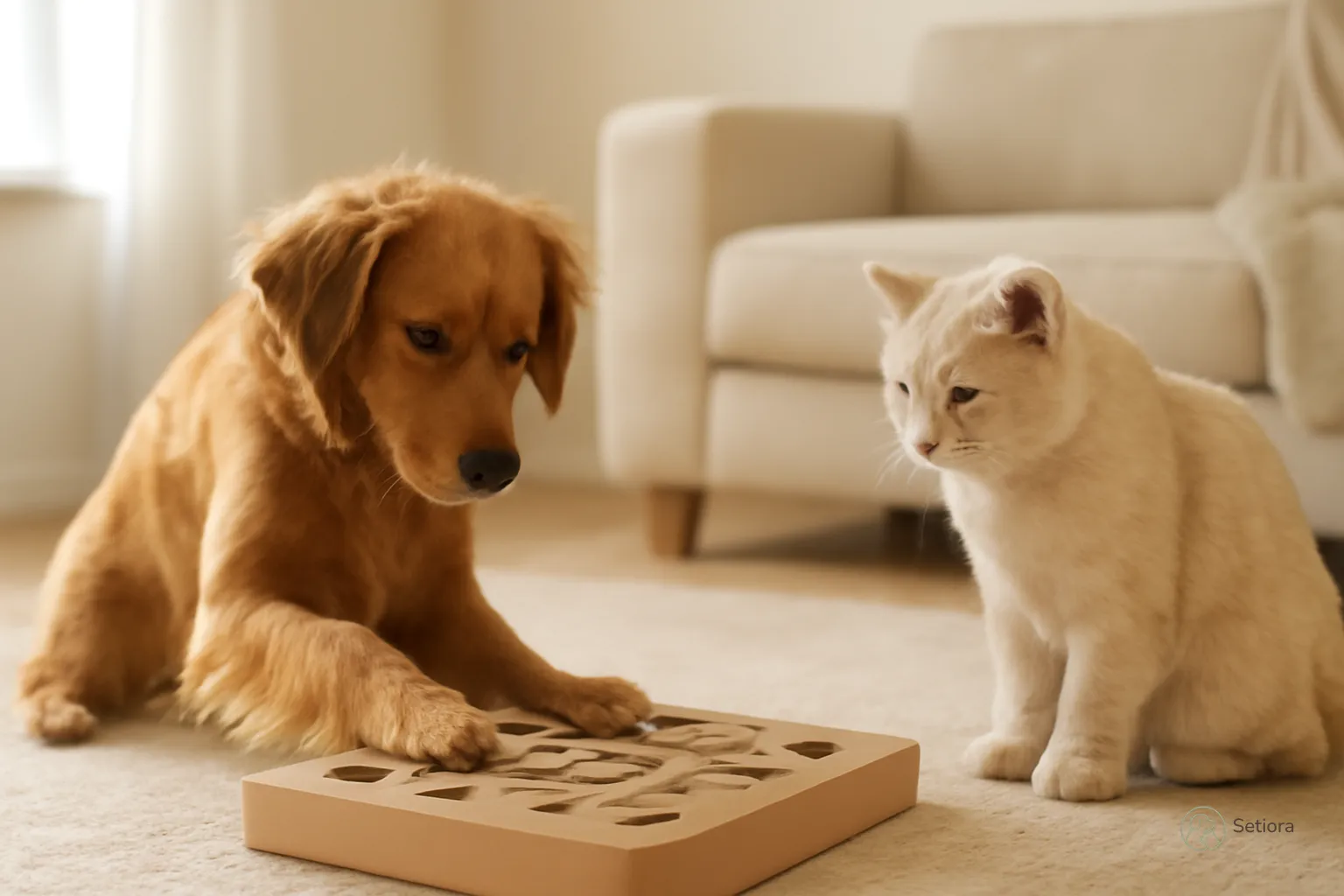
You give your dog a walk, feed your cat, and keep plenty of toys around — but your pet can still wander the house looking for something to do. Boredom may show up as chewing, scratching, excessive vocalization, or restless behavior.
The good news is that enrichment doesn't need to be expensive or complicated. These indoor enrichment activities for dogs and cats use food, scent, play, training, and simple household items to make ordinary days more interesting.
Why Mental Enrichment Matters
Mental stimulation complements physical exercise. A scent game or food puzzle may tire your pet without requiring a long run, which is especially helpful during bad weather, recovery from injury, or busy days.
Regular enrichment can help:
- Reduce boredom and unwanted behaviors
- Give anxious pets a predictable activity
- Encourage natural behaviors such as sniffing, stalking, chewing, and foraging
- Support cognitive health throughout life
- Build confidence through small, achievable challenges
- Strengthen the bond between you and your pet
Dogs often enjoy scent work and problem-solving tasks. Cats usually prefer short bursts of stalking and pouncing, along with high or hidden spaces. The best plan includes variety rather than asking one toy to do everything.
Quick Tips Before You Start
A good enrichment activity should be challenging but achievable. If your pet never succeeds, frustration can replace curiosity. Start with an easy version, then increase the difficulty gradually.
Keep these principles in mind:
- Use short sessions: A few minutes up to roughly 15 minutes may be enough, depending on your pet's age, stamina, and interest.
- Offer variety: Rotate toys and activities every few days to a couple of weeks so they stay novel.
- Reward thoughtfully: Use part of your pet's regular meal in food puzzles, or choose low-calorie treats. Reduce meal portions as needed to account for enrichment calories.
- Supervise new activities: Watch for chewing, swallowing, tangled strings, or possessive behavior.
- Adapt for ability: Make activities easier for puppies, kittens, senior pets, and animals with arthritis, vision loss, or other health concerns.
- Separate pets when needed: In multi-pet homes, set up individual stations so one pet cannot monopolize the food or toys.
Avoid small parts, magnets, staples, toxic adhesives, and loose strings. Cats should never be left unsupervised with string, ribbon, or elastic toys. If you're unsure whether an activity fits a health condition, ask your veterinarian before introducing it — and bring the most relevant details to the appointment by following our guide on what to bring to every vet visit.
Top Indoor Enrichment Activities for Dogs and Cats
Here are 15 simple options to try. Most work for both species, but the best version will depend on your pet's natural preferences.
1. Snuffle Mat
Best for: Dogs, with adaptations for some cats
Hide pieces of kibble in the fabric strips of a snuffle mat and let your pet search with their nose. This turns a regular meal into a calm foraging activity and is one of the easiest indoor dog activities for rainy days.
Begin with food placed near the surface. As your dog learns, hide pieces more deeply. Choose a mat made from pet-safe materials and supervise until you know your pet won't chew or pull off the fabric.
2. Food-Dispensing Puzzle Toy
Best for: Dogs and cats
Fill a treat-dispensing toy or sturdy rubber food toy with part of your pet's normal meal. Rolling, nudging, or pawing releases the food a little at a time.
Select a beginner setting first. For cats, choose a puzzle sized for their paws and use smaller food pieces. Stop if your pet becomes frustrated or tries to break the toy.
3. Scatter Feeding and Indoor Foraging
Best for: Dogs and cats
Instead of placing the entire meal in a bowl, scatter some kibble across a safe room or hide small portions in easy-to-find locations. This encourages searching and slows down fast eaters.
For cats, use smaller hiding spots and keep food away from litter boxes. Increase the number of hiding places gradually rather than making the game difficult immediately. Tracking meals and behavior over time is useful — small weight changes or appetite shifts can be early warning signs, so consider our cat weight tracking guide if you're monitoring a feline friend's intake.
4. Muffin Tin Treat Game
Best for: Dogs and cats
Place a few treats or pieces of kibble in the cups of a muffin tin, then cover some cups with pet-safe balls. Your pet must move the balls to reach the food.
Use large, durable balls that cannot be swallowed. Start by covering only one or two cups, then add more as your pet understands the game.
5. “Find It” Scent Game
Best for: Dogs, adaptable for cats
Ask your dog to wait while you place a treat or favorite toy nearby. Say “find it,” then let them search. Begin in one room with the item partially visible before hiding it more carefully.
Scent work is particularly rewarding for dogs and can provide meaningful mental exercise without heavy physical activity. For a cat, try placing a favorite toy near a cardboard box or behind a low, safe object.
6. Hide-and-Seek
Best for: Dogs and cats
Have your dog stay while you hide behind a doorway, then call them to find you. Celebrate warmly when they arrive. If your dog doesn't know “stay,” have another person hold them briefly or begin with an obvious hiding place.
For cats, hide behind a box or furniture and invite them to follow a wand toy toward you. Keep the game gentle and let your cat choose whether to participate.
7. Short Trick-Training Sessions
Best for: Dogs, with simple behaviors for cats
Spend five to ten minutes practicing behaviors such as touch, spin, chin rest, putting toys away, or stepping onto a mat. Reward-based training gives your pet a problem to solve while also improving communication.
Keep sessions short and finish after a successful repetition. Puppies and senior dogs may need fewer repetitions, while energetic or working breeds may enjoy gradually learning a sequence of behaviors.
8. Indoor Tug and Fetch
Best for: Dogs
Use a soft toy for short tug sessions or roll a lightweight toy down a hallway. Keep fetch distances modest and choose a surface where your dog can turn without slipping.
Avoid rough pulling or sudden movements if your dog has joint pain, dental problems, or another condition that affects play. Teach a reliable release cue so tug stays cooperative.
9. Wand Toy Chase
Best for: Cats
Move a wand toy like prey: pause, hide it behind a box, then let it dart away. Short, lively sessions often suit cats better than one long play period.
Allow your cat to catch the toy regularly. Never leave the wand or string toy out after play, and finish with a tangible toy or small portion of food so the “hunt” has a satisfying ending.
10. Lick Mat
Best for: Dogs and cats
Spread a thin layer of a pet-safe food on a lick mat. Depending on your pet's diet and veterinary guidance, this might include a little plain yogurt, canned pumpkin, or a commercial pet-safe paste.
Licking can create a calm, focused activity, but it still contains calories. Supervise the mat, especially if your pet tries to chew it rather than lick it.
11. Frozen Stuffed Toy or Treat Block
Best for: Dogs and cats
Fill a durable toy with part of your pet's meal and freeze it, or freeze a small amount of pet-safe food in a suitable container. The colder texture extends the activity and may be useful for dogs who enjoy chewing.
Make sure the toy is large enough not to be swallowed. Avoid hard frozen items for pets with dental disease, and check with your veterinarian if your pet has digestive or dietary restrictions.
12. DIY Towel or Cardboard Puzzle
Best for: Dogs and cats
Place a few pieces of kibble on a towel, fold or loosely roll it, and let your pet work out how to open it. You can also use a cardboard tube with food inside and the ends gently folded closed.
Use only clean, unprinted cardboard and remove it when it becomes soggy or torn. Some pets will try to eat the towel or cardboard, so this activity requires close supervision.
13. Adjustable Puzzle Feeder
Best for: Dogs and cats
Sliding panels, lifting lids, and compartments give your pet different ways to access food. Puzzle feeders are useful because you can often adjust the difficulty as your pet learns.
Don't assume every dog will solve a puzzle quickly. Some pets need demonstrations and easier settings, while others need more advanced challenges. The goal is engagement, not a test they must pass.
14. Boxes, Paper Bags, and Vertical Spaces
Best for: Cats primarily; boxes also suit many dogs
Offer a cardboard box, a paper bag with the handles removed, or a safe hiding area for your cat to explore. Cat shelves, a cat tree, or a stable window perch add vertical choices and viewing opportunities.
Dogs may enjoy investigating a box or searching for a toy inside it. Check all items for loose tape, staples, sharp edges, and unstable surfaces. If your indoor cat spends most of their time inside, our piece on indoor vs outdoor cat health checks outlines which checks are still important even for homebound pets.
15. Scent Trails and Scent Boxes
Best for: Dogs, with a gentle variation for cats
Create a short scent trail using a few pieces of kibble leading to a reward, or place a familiar toy in one of several open boxes. Keep the first trail simple, then make it longer or add empty boxes.
For cats, place cat-safe scent enrichment, such as a little catnip if they enjoy it, near a box or toy. Avoid essential oils and unfamiliar substances, which may irritate or harm pets.
How to Build a Weekly Enrichment Plan
You don't need to use all 15 activities in one week. Two or three short sessions spread across the day are often more effective than one exhausting session.
A simple rotation might look like this:
| Day | Morning | Afternoon | Evening |
|---|---|---|---|
| Monday | Scatter feeding | Short training | Wand play or tug |
| Tuesday | Snuffle mat | Rest | Lick mat |
| Wednesday | Find-it scent game | Cardboard puzzle | Gentle play |
| Thursday | Puzzle feeder | Window or box exploration | Short training |
| Friday | Frozen food toy | Hide-and-seek | Wand play or fetch |
| Saturday | Muffin tin game | Scent trail | Calm licking activity |
| Sunday | Easy favorite activity | Toy rotation | Quiet exploration |
Watch what your pet chooses and how long they stay engaged. Put some toys away after use and reintroduce them later. A familiar toy can feel new again after a rest period.
Keeping enrichment, meal portions, and health notes organized makes it easier to provide consistent care — and a single place to track those details helps you spot trends. If you don't already keep a running record, our pet health timeline checklist is a simple tool to record meals, activities, medications, and vet notes so nothing gets missed.
How to Tell If an Activity Fits
Your pet should look curious, focused, and relaxed. The activity may be too difficult if they:
- Walk away immediately
- Whine, vocalize, or paw frantically
- Start chewing the container instead of solving the puzzle
- Show signs of stress or avoidance
Make it easier by exposing the food, reducing the number of steps, or demonstrating the solution. On the other hand, an activity may be too easy if your pet finishes immediately and loses interest every time. Add another layer gradually, such as more hiding places or a slightly more complex puzzle.
Stop the activity if your pet becomes distressed, guards resources, swallows materials, or shows pain. Sudden behavior changes, compulsive behaviors, or severe anxiety deserve attention from a veterinarian or qualified behavior professional.
Low-Cost DIY Materials
Many useful enrichment tools are already around your home:
- Muffin tins
- Large pet-safe balls
- Clean towels
- Cardboard boxes
- Paper bags with handles removed
- Empty toilet paper tubes
- Old cotton T-shirts
- Sturdy food containers
- Soft toys
- A washable blanket
Avoid staples, tape that can be swallowed, small plastic pieces, toxic glues, and anything that splinters. Replace homemade items as soon as they become damaged.
Final Takeaway
Enrichment is not about keeping your pet busy every minute. It's about giving them safe ways to sniff, search, solve, stalk, chew, play, and connect with you.
Try one or two activities first and note what your pet enjoys. A dog may prefer scent trails over complex puzzles, while a cat may choose a window perch and a five-minute wand session. Keeping those preferences, meal portions, health notes, and routines organized makes it easier to provide consistent care — and Setiora helps bring those everyday details together in one place.
Small changes can make indoor life much richer for both of you.
Track your pet's health with Setiora
Log vaccinations, medications, weight, and vet visits — all offline, all organised.
Join Waitlist →