
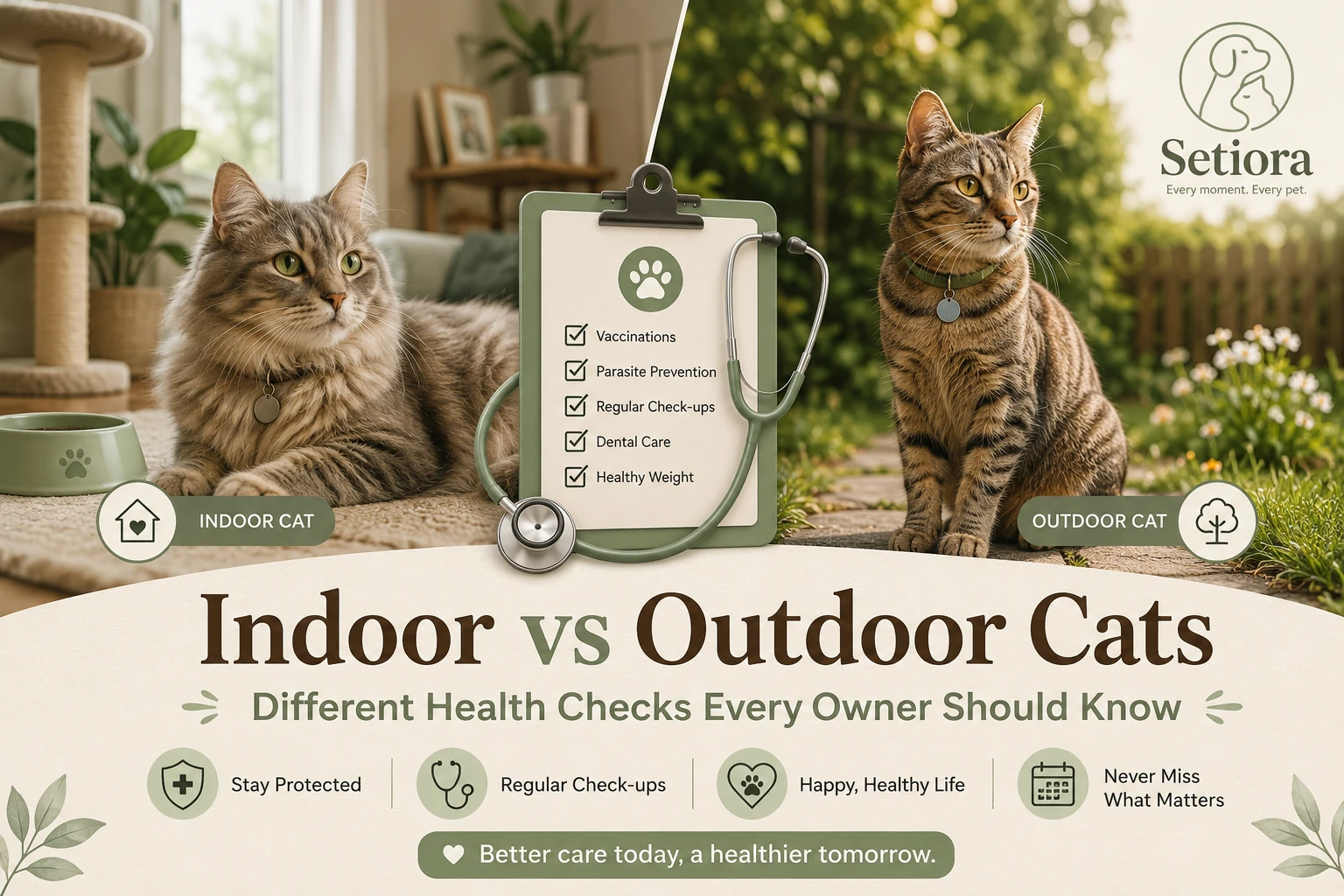
Many people assume indoor cats don't need much veterinary care because they're protected from traffic, wildlife, and other outdoor dangers.
While indoor cats generally face fewer risks, they still need regular health checks, vaccinations, dental care, and parasite prevention. Outdoor cats, meanwhile, require additional monitoring because of their increased exposure to disease, injuries, and parasites.
Understanding these differences can help you keep your cat healthy regardless of their lifestyle.
Why Lifestyle Changes Health Risks
| Indoor Cats | Outdoor Cats |
|---|---|
| Lower injury risk | Higher injury risk |
| Lower parasite exposure | Higher parasite exposure |
| Less infectious disease exposure | Greater disease exposure |
| More obesity risk | More injury risk |
| More boredom risk | More environmental hazards |
Health Checks Every Cat Needs
Regardless of lifestyle, every cat benefits from these core checks:
- Annual veterinary exam
- Weight monitoring
- Dental examination
- Vaccination review
- Parasite assessment
- Behaviour changes
- Appetite monitoring
- Hydration
- Skin and coat inspection
Extra Care for Indoor Cats
Indoor cats are sheltered from many outdoor dangers, but a sedentary, enclosed lifestyle brings its own set of risks:
- Weight gain — indoor cats burn far fewer calories than their outdoor counterparts, making portion control essential.
- Lack of exercise — limited space can mean limited movement, which contributes to joint and weight issues over time.
- Dental disease — indoor diets and reduced chewing activity can accelerate tartar buildup.
- Mental stimulation — boredom in indoor cats can show up as overgrooming, aggression, or destructive behaviour.
- Litter box monitoring — changes in frequency, straining, or avoidance are often the first sign of a health issue.
- Indoor parasites can still occur — fleas and mites can hitch a ride in on clothing, other pets, or open windows.
- Routine vaccinations based on veterinary guidance — even strictly indoor cats benefit from a vaccination schedule tailored to their risk level.
Extra Care for Outdoor Cats
Cats with outdoor access face a wider range of physical hazards and need more frequent monitoring:
- Fleas
- Ticks
- Worms
- Bite wounds
- Abscesses
- Broken nails
- Poison exposure
- Road accidents
- Wildlife encounters
- More frequent parasite prevention
Any new limp, wound, or behaviour change after time outdoors is worth a closer look — outdoor cats are skilled at hiding injuries until they become serious.
Vaccines: Indoor vs Outdoor
Vaccination needs aren't one-size-fits-all. They vary based on:
- Local disease prevalence
- Age
- Travel
- Exposure to other animals
- Lifestyle
Not every cat needs the exact same vaccine schedule — per AAFP Feline Vaccination Guidelines, an indoor-only cat with no contact with other animals may need a different protocol than one that roams the neighbourhood. Always follow your veterinarian's recommendations rather than a generic schedule.
Quick Monthly Checklist
Indoor
- ✓ Check weight
- ✓ Brush teeth
- ✓ Clean ears
- ✓ Watch litter habits
- ✓ Play daily
Outdoor
- ✓ Check paws
- ✓ Check for ticks
- ✓ Inspect skin
- ✓ Look for wounds
- ✓ Monitor appetite
Conclusion
Whether your cat spends every day curled up on the sofa or exploring the neighbourhood, preventive care is far easier than treating illness later. A consistent routine of health checks, veterinary visits, and timely reminders helps catch problems early and keeps your cat healthier over the long term.
Keeping track of vaccinations, parasite treatments, and routine health checks doesn't have to be complicated. Setiora helps you organize reminders, store health records, and keep everything about your cat in one place — whether they're an indoor explorer or an outdoor adventurer.
Sources
Lifestyle-based health guidance above reflects recommendations from:
Not veterinary advice
This article is for general educational purposes only and isn't a substitute for individualized guidance from a licensed veterinarian. Always consult your vet before starting, changing, or stopping any vaccination, medication, or treatment for your pet, and seek immediate veterinary or emergency care for urgent symptoms.
Track your pet's health with Setiora
Log vaccinations, medications, weight, and vet visits — all offline, all organised.
Join Waitlist →