
Your dog ducks behind the sofa when thunder starts. Maybe they pace during fireworks, tremble at the vet, or become distressed the moment you pick up your keys. Seeing a nervous dog struggle can leave you wondering what to do — and whether you're accidentally making things worse.
The right approach is patient, predictable, and reward-based. These calming techniques for anxious dogs can help your companion feel safer, build confidence, and cope better with stressful situations over time.
Recognize the Signs of Anxiety
Anxiety is a normal emotional response to something a dog finds threatening or unfamiliar. Triggers can include loud noises, separation, new environments, unfamiliar people or animals, handling, and past frightening experiences.
Some signs are obvious. Others are easy to miss.
Watch for:
- Panting when your dog has not been exercising
- Lip licking or repeated yawning
- Pacing, trembling, or restlessness
- Crouching or keeping the tail tucked
- Pinned-back ears
- Avoiding eye contact or hiding
- “Whale eye,” where the whites of the eyes are visible
- Freezing or becoming unusually still
- Barking, whining, or howling
- Destructive behavior during separation
- Accidents in the house
- Refusing food
- Excessive attempts to escape
Important: Not every anxious dog looks visibly panicked. Some dogs freeze or mask their stress, especially in unfamiliar places. A dog who seems quiet at the vet may still be overwhelmed.
Start by noticing when the behavior happens, what came before it, and how long it takes your dog to recover. Keeping a simple record can help you identify patterns — and using a consistent health timeline like the one in our Pet Health Timeline Every Owner Should Keep makes it much easier to spot gradual changes.
Help Your Dog Feel Safe Right Away
When your dog is already frightened, the goal is not to teach a new skill. The goal is to reduce pressure and help them get through the moment safely.
Create a Quiet Safe Space
Choose a calm area away from busy entrances and windows. This might be a room, a corner behind furniture, or a crate your dog already enjoys using.
Add:
- Comfortable bedding
- A familiar blanket or toy
- An item that smells like you
- Fresh water
- A long-lasting chew or food puzzle
- Low lighting, if that helps your dog settle
Never force your dog into the space or use it as punishment. A crate can become a comforting den when introduced positively, but poorly introduced confinement may increase stress. If you’re just starting to build predictable routines around your dog’s safe spaces and care, our guide on Building a Pet Health Routine That Actually Sticks has practical tips for making small habits durable.
Reduce the Trigger
For storms or fireworks, close windows and curtains to limit flashes and sound. White noise, a fan, or calming music designed for dogs may soften sudden noises. During visitors, give your dog the option to retreat before people arrive.
If your dog is afraid of a person, animal, or object, create distance rather than insisting on an interaction.
Stay Calm and Give Choice
Use a steady voice and move slowly. You can sit nearby if your presence helps, but allow your dog to decide whether they want contact.
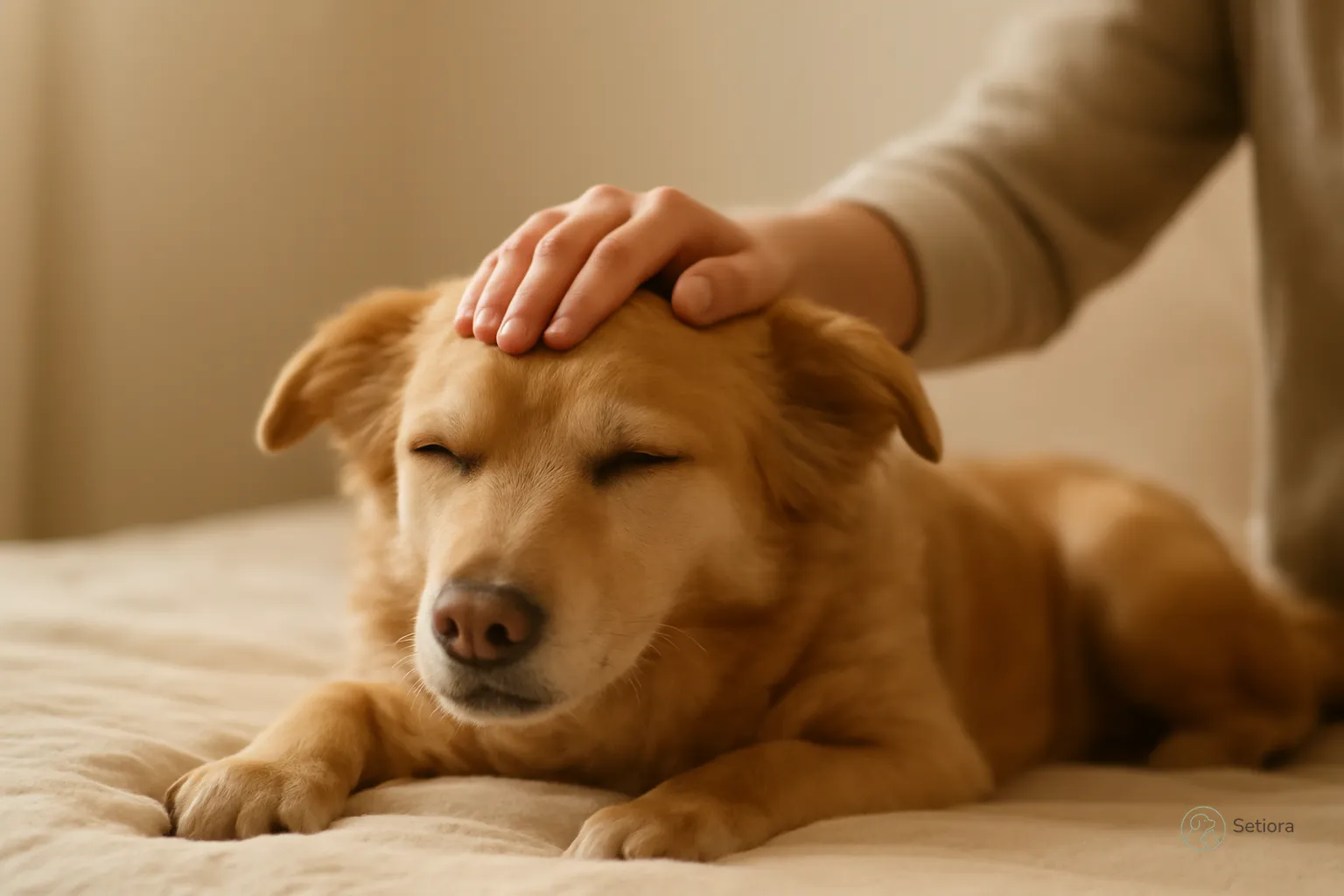
Some dogs appreciate gentle petting. Others feel more secure when left alone. Watch their body language and stop if they turn away, stiffen, or try to escape.
Do not scold, drag, corner, or force a fearful dog to “face” the trigger. Fear is an emotional response, not disobedience.
Calming Techniques for Anxious Dogs
Different dogs respond to different strategies. A combination of environmental changes, training, enrichment, and professional guidance often works better than relying on one product or quick fix.
Use Desensitization and Counter-Conditioning
Desensitization and counter-conditioning are commonly recommended behavior-modification approaches for fear and anxiety. They work by presenting a trigger at a low enough intensity that your dog can remain comfortable, then pairing it with something wonderful.
For example, if your dog fears a particular sound:
- Play a recording of the sound at barely audible volume.
- Immediately offer a favorite treat.
- Stop before your dog becomes tense or worried.
- Repeat over several short sessions.
- Increase the volume only when your dog remains relaxed.
- Return to an easier level if your dog shows stress.
The same principle can apply to car rides, visitors, nail trims, or seeing other dogs. Progress should be gradual. If your dog stops eating, hides, freezes, or begins panting, the trigger is probably too intense.
Pro tip: Five calm minutes can be more useful than one long session that overwhelms your dog.
Build Confidence Through Reward-Based Training
Predictable training gives your dog a way to succeed. Keep sessions short and reward small steps.
Try:
- Responding to their name
- Touching your hand with their nose
- Sitting on a mat
- Finding treats in a towel
- Walking to their safe space
- Simple tricks such as touch, spin, or paw
- Calmly looking at a trigger and then looking back at you
Use rewards your dog genuinely values, such as small food treats, toys, praise, or access to a favorite activity. Confidence-building games should feel achievable, not like a test.
Keep Daily Life Predictable
A consistent routine can lower your dog's baseline stress. Meals, walks, rest, play, and bedtime do not need to happen at exactly the same minute, but a familiar rhythm helps many dogs know what to expect.
Include:
- Regular meal times
- Daily walks suited to your dog's fitness and comfort
- Quiet rest periods
- Short training games
- Predictable departures and arrivals
- A familiar bedtime routine
Exercise can help release energy, but more is not always better. Overly intense activity may leave an anxious dog overtired or physically stressed. Choose calm walks, sniffing opportunities, and play that suit your dog's age and health.
If you track small daily changes like weight, appetite, or water intake alongside behavior, you’ll catch health-related contributors earlier — see our guides on Is Your Pet Drinking Too Much or Too Little Water? and other monitoring tips.
Add Mental Enrichment
Mental stimulation can help reduce boredom and provide an appropriate outlet for nervous energy.
Consider:
- Puzzle feeders
- Scatter feeding in grass
- Sniffing games
- Frozen food toys
- Short trick-training sessions
- Simple scent-work games
- Safe chew items
If your dog is too anxious to eat, do not force enrichment. Start with whatever feels easiest and safest.
Try Pressure Wraps Carefully
A pressure wrap, sometimes called a calming vest, provides gentle body coverage that may help some dogs during short-term stress. Results vary, and a wrap is not a solution for every type of anxiety.
Introduce it slowly:
- Let your dog sniff it
- Reward calm investigation
- Put it on briefly without fastening it tightly
- Remove it before your dog becomes uncomfortable
- Gradually increase wearing time
Your dog should be able to move, breathe, and pant normally. Never leave a newly introduced wrap on unsupervised.
Consider Pheromone Products or Supplements
Dog-appeasing pheromone diffusers, sprays, or collars may help some dogs feel more settled. Supplements containing ingredients such as L-theanine, chamomile, melatonin, or fish oil are also marketed for calming, but evidence and results vary.
A product labeled “natural” is not automatically safe for every dog. Ask your veterinarian before using supplements, especially if your dog takes medication or has an existing health condition. Do not combine products without checking first.
Techniques for Common Stressful Situations
Thunderstorms and Fireworks
Prepare before the noise begins. Once a dog is panicking, learning becomes much harder.
- Exercise earlier in the day, if your dog enjoys it
- Set up the safe space before the storm or event
- Close windows and curtains
- Use white noise or background music
- Offer a favorite chew or food toy
- Reward calm behavior without forcing interaction
- Keep doors and gates secure to prevent escape
Between events, gradual sound desensitization may help. Keep recordings at a very low volume and pair them with rewards, increasing intensity slowly over many sessions.
Separation Anxiety
A dog with separation anxiety may panic when left alone, even if they appear relaxed while you are home. Signs can include barking, destructive behavior, attempts to escape, drooling, pacing, or accidents shortly after departure.
Helpful steps may include:
- Practicing very brief absences
- Returning before your dog becomes distressed
- Making departures and arrivals calm
- Offering a food toy if your dog can eat while alone
- Keeping a predictable routine
- Using a camera to observe behavior when you are away
Do not suddenly leave a severely distressed dog alone for long periods as a training strategy. Separation anxiety often needs a carefully structured behavior plan and professional guidance.
Vet Visits and Grooming
Make handling less surprising by practicing at home. Briefly touch your dog's ears, paws, or collar, then offer a reward. Stop while your dog is still comfortable.
You can also:
- Leave the carrier or car harness accessible at home
- Reward your dog for approaching it
- Take short, low-pressure car rides
- Ask your veterinary clinic about brief happy visits
- Choose force-free grooming professionals
- Bring high-value treats to appointments
Tell the veterinary team about your dog's fears before the visit. They may be able to adjust the environment or plan handling more gradually. For one-off appointments, preparing and bringing the right items can make a big difference — our checklist of 10 Things Your Vet Wishes You'd Bring to Every Appointment can help ensure the visit goes as smoothly as possible.
Common Mistakes to Avoid
Anxious dogs need safety, not pressure.
Avoid:
- Punishing barking, trembling, hiding, or defensive behavior
- Forcing your dog to greet people or animals
- Using shock, prong, or choke-based training tools
- Increasing exposure too quickly
- Expecting one calming product to solve the problem
- Treating every anxious behavior as a training failure
- Assuming your dog will simply grow out of anxiety
- Using supplements or medication without veterinary guidance
Comforting your dog does not “reward fear” in the simple way many people worry about. Calmly offering support and helping your dog feel safe is different from creating a frightening situation or dramatically reacting to it.
When to Seek Professional Help
Contact your veterinarian if anxiety is sudden, worsening, or interfering with normal eating, sleeping, movement, or daily life. Pain and other medical problems can sometimes contribute to behavior changes.
Professional help is especially important when your dog:
- Panics or injures themselves trying to escape
- Shows severe destruction when alone
- Displays fear-based aggression
- Cannot settle during storms or fireworks
- Refuses food around common triggers
- Becomes increasingly withdrawn
- Does not improve with careful home strategies
Your veterinarian can check for medical contributors and discuss whether medication may be appropriate. For moderate or severe anxiety, prescription medication can sometimes make behavior modification more humane and effective. It is typically used as part of a broader plan, not as a replacement for training.
You may also benefit from a veterinary behaviorist, certified applied animal behaviorist, or certified professional dog trainer who uses force-free methods. Organizations such as the American Veterinary Society of Animal Behavior offer guidance on humane, evidence-informed behavior care.
A Simple Daily Plan
Small, consistent actions add up.
- Keep meals, walks, rest, and bedtime reasonably predictable
- Provide a quiet safe space your dog can choose
- Practice one short confidence-building game
- Add a sniffing activity or food puzzle
- Reward calm observation from a comfortable distance
- Record triggers and body-language changes
- Avoid punishment and forced interaction
- Schedule a veterinary appointment if anxiety is persistent or severe
Progress may take weeks or longer, depending on the trigger, your dog's history, and how consistently the plan is followed. Setbacks are normal. The aim is not to make your dog fearless overnight; it is to help them recover more easily and feel safer over time.
How Setiora Can Help
Supporting an anxious dog often involves several moving parts: routines, training sessions, medication reminders, vet appointments, trigger notes, and changes in behavior. Keeping those details organized makes it easier to notice patterns and stay consistent when progress feels slow.
Setiora helps you keep your pet's care information and reminders together, so you can focus less on remembering every detail and more on giving your dog calm, predictable support.
A nervous dog does not need to be pushed into bravery. With patience, clear routines, reward-based training, and the right professional support when needed, your dog can learn that the world is more manageable than it first seemed.
Not veterinary advice
This article is for general educational purposes only and isn't a substitute for individualized guidance from a licensed veterinarian. Always consult your vet before starting, changing, or stopping any vaccination, medication, or treatment for your pet, and seek immediate veterinary or emergency care for urgent symptoms.
Track your pet's health with Setiora
Log vaccinations, medications, weight, and vet visits — all offline, all organised.
Join Waitlist →