

You probably don't think much about your pet's water bowl — until one day it seems to empty much faster than usual, or barely at all.
Changes in drinking habits are easy to overlook, but they can sometimes be one of the earliest signs that something isn't quite right. While weather, activity, and diet all affect how much water a pet drinks, sudden or persistent changes deserve your attention.
So, how much water is actually normal?
How Much Water Should Your Pet Drink?
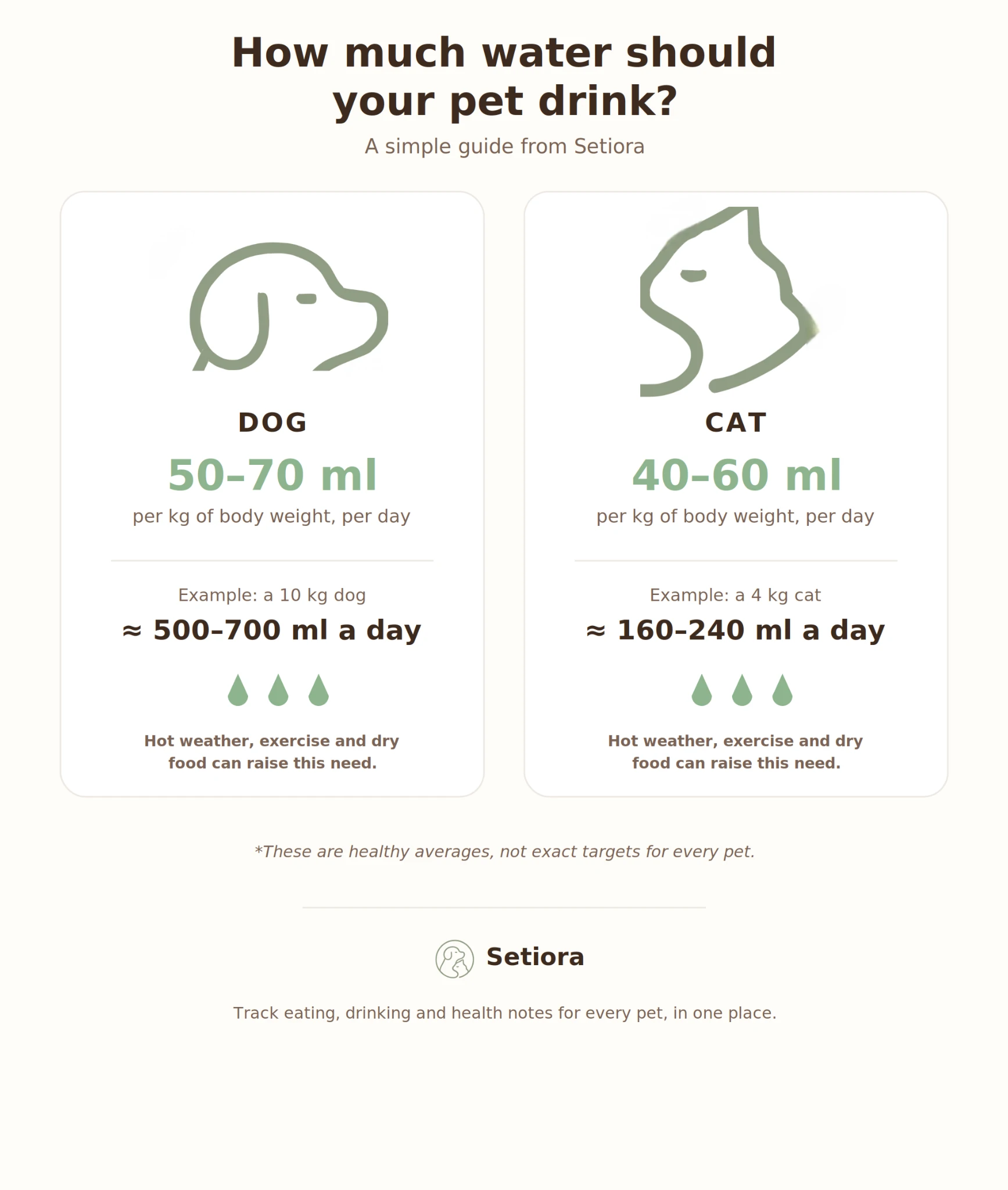
Healthy pets generally need the following amount of water each day.
According to veterinary references such as the Merck Veterinary Manual, a healthy pet's daily water intake depends on several factors, including:
- Body weight
- Activity level
- Weather
- Dry food vs. wet food
- Age
- Pregnancy or nursing
As a general guide:
- Dogs: approximately 50–70 ml per kilogram of body weight each day
- Cats: approximately 40–60 ml per kilogram of body weight each day
Don't worry about measuring every milliliter. What's more important is noticing changes from your pet's normal routine.
When Drinking More Water Is Normal
Before you start worrying, it's worth knowing that increased thirst is often completely harmless. Common, everyday causes include:
- Hot summer days
- Long walks
- Exercise
- Dry kibble
- Nursing mothers
If the increase lines up with one of these, it's usually nothing to worry about.
When Drinking Too Much Could Be a Warning Sign
Persistent or unexplained increases in thirst are worth paying closer attention to. Watch for:
- Constant trips to the bowl
- Excessive urination
- Drinking from unusual places (toilet, sink, puddles)
- Weight loss
- Lethargy
When these patterns show up together, they can sometimes be linked to underlying conditions such as:
- Diabetes
- Kidney disease
- Hyperthyroidism (in cats)
- Cushing's disease (in dogs)
This isn't a diagnosis — only a veterinarian can determine the actual cause. But persistent excessive thirst is a signal worth acting on rather than waiting out.
Signs Your Pet May Not Be Drinking Enough
Not drinking enough water is just as important to catch. Signs of dehydration include:
- Dry gums
- Thick saliva
- Sunken eyes
- Reduced energy
- Loss of skin elasticity
- Poor appetite
Should You Be Worried?
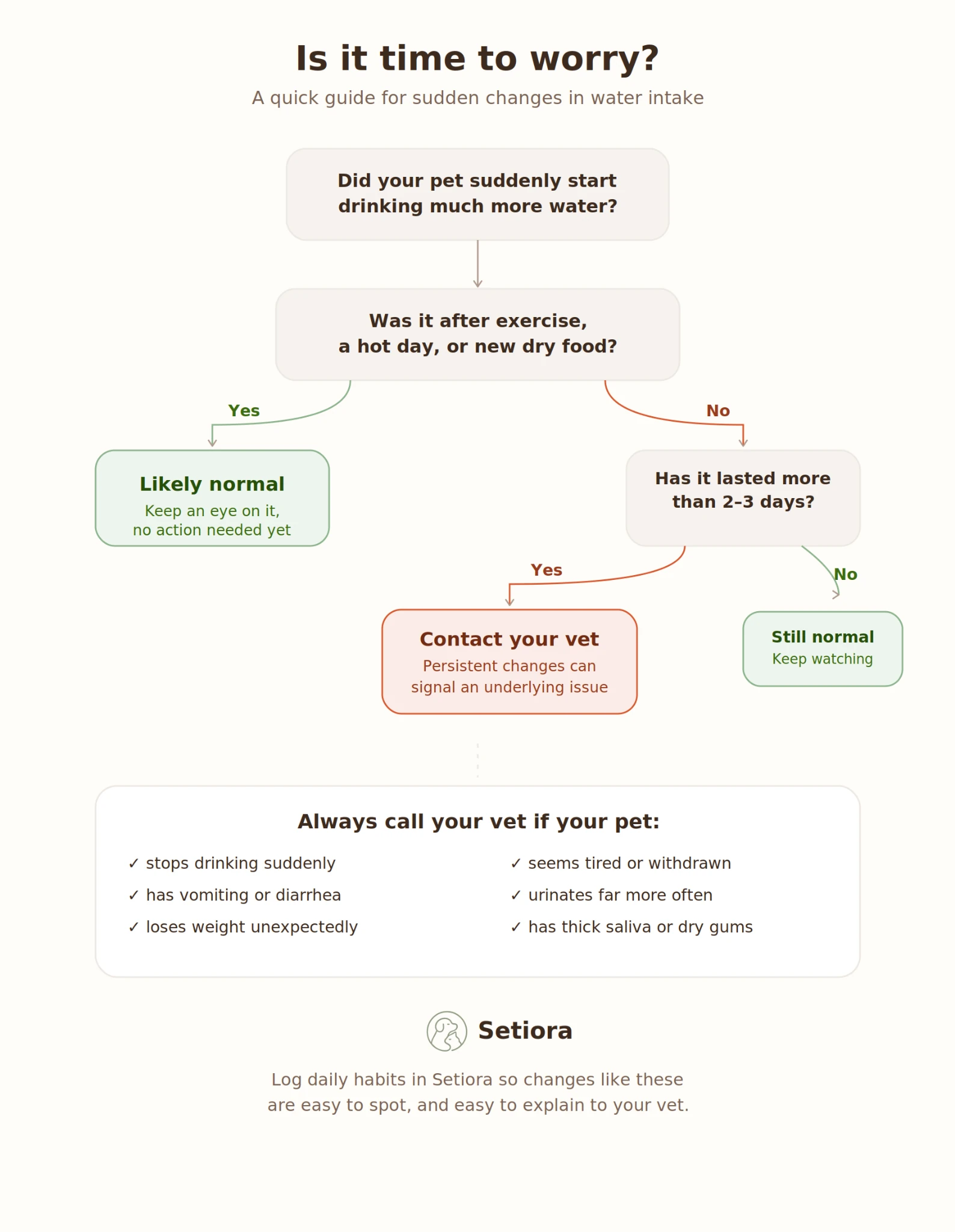
Use this quick decision tree to gauge whether a change in drinking habits is probably normal.
Temporary increases or decreases in thirst are common and usually resolve on their own. But if excessive thirst lasts more than a day or two — or is accompanied by other symptoms such as vomiting, weight loss, or increased urination — it's best to consult a veterinarian promptly.
Simple Ways to Encourage Healthy Hydration
A few small habits can make a big difference in keeping your pet properly hydrated:
- Refresh water daily
- Wash bowls regularly
- Place bowls in multiple locations
- Try a pet fountain
- Add water to meals when appropriate
- Offer fresh water after exercise
When to Contact Your Veterinarian
If your pet:
✅ suddenly drinks much more than usual
✅ suddenly refuses water
✅ becomes lethargic
✅ loses weight
✅ urinates much more often
✅ has vomiting or diarrhea
...it's time to seek veterinary advice.
Don't Rely on Memory
Most owners don't notice gradual changes because they happen over weeks — not hours.
Keeping a simple record of water intake, appetite, medications, and health events can help you recognize patterns and provide your veterinarian with more useful information during a visit. Setiora makes this easy — log daily habits alongside vaccinations, medications, and vet visits, so subtle changes don't slip past you.
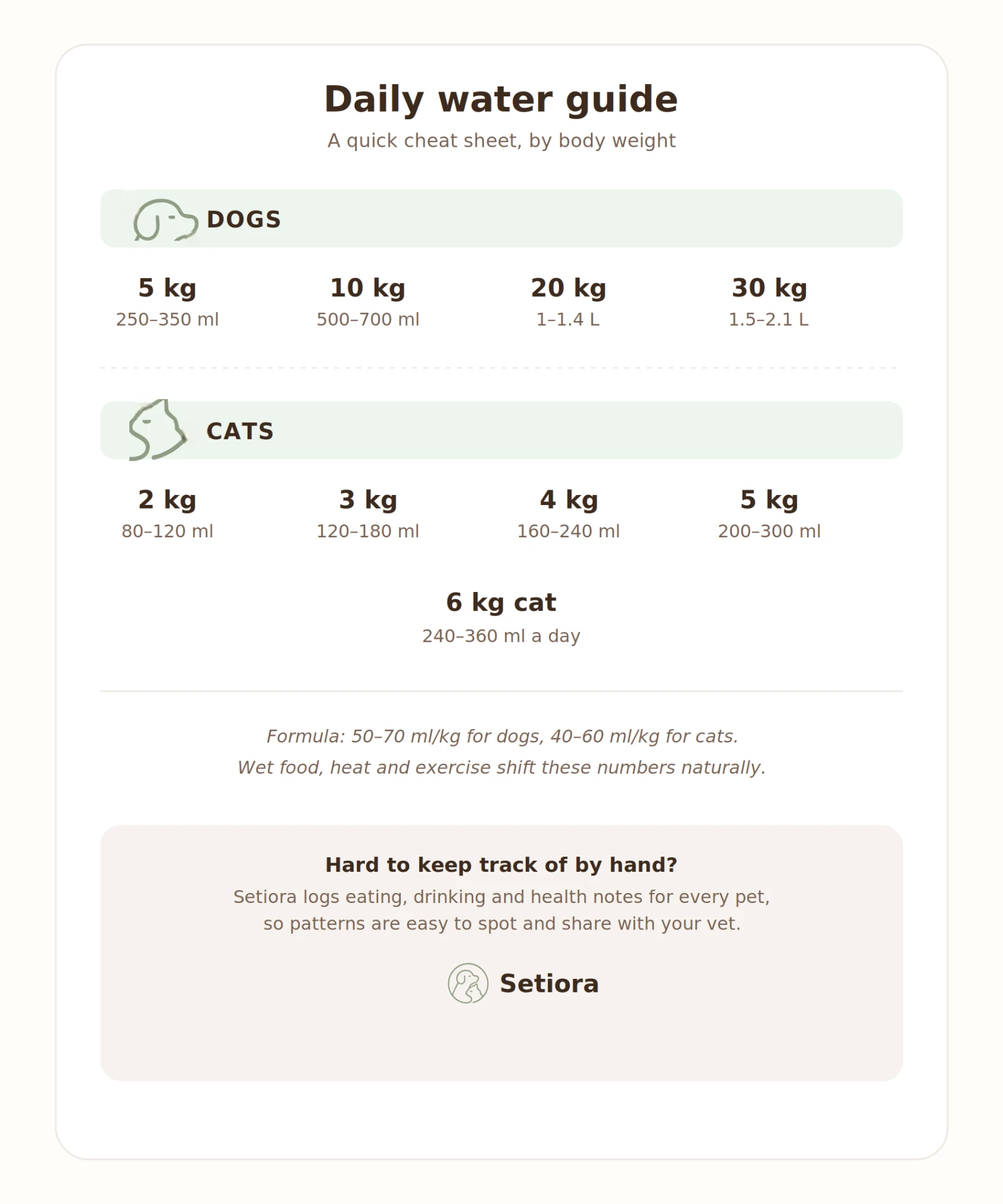
If several of these signs appear together, contact your veterinarian promptly.
Frequently Asked Questions
How much water should my dog drink each day?
Most dogs need approximately 50–70 ml of water per kilogram of body weight each day, though this varies with activity level, weather, and diet.
How much water should a cat drink?
Cats generally need around 40–60 ml per kilogram of body weight daily. Cats on wet food often drink less from the bowl since they get moisture from their meals.
Can pets drink too much water?
Yes. Persistent excessive thirst can be linked to conditions such as diabetes, kidney disease, or hormonal disorders, and is worth discussing with a veterinarian if it continues for more than a day or two.
How can I tell if my pet is dehydrated?
Common signs include dry or sticky gums, thick saliva, sunken eyes, low energy, and loss of skin elasticity. If you gently pinch the skin at the scruff and it doesn't spring back quickly, that can indicate dehydration.
Why is my dog suddenly drinking more water?
Sudden increases can be due to heat, exercise, or a change in diet — but if it's unexplained and persistent, it can also be an early sign of an underlying health condition and is worth a vet visit.
Is wet food enough to keep my cat hydrated?
Wet food has a much higher moisture content than dry kibble and can meaningfully contribute to hydration, but fresh water should still always be available.
Conclusion
You don't need to measure every sip your pet takes. The most valuable habit is paying attention to what is normal for them. Small changes in drinking behavior are often the first clue that something has changed, and noticing those changes early can make all the difference.
Sources
Water intake ranges and the conditions linked to excessive thirst reflect general veterinary guidance from:
Water needs vary by individual pet — always confirm what's normal for your pet with your veterinarian.
Setiora helps you keep track of the small daily details — water, appetite, medications, and vet visits — so you can spot patterns before they become problems.
Not veterinary advice
This article is for general educational purposes only and isn't a substitute for individualized guidance from a licensed veterinarian. Always consult your vet before starting, changing, or stopping any vaccination, medication, or treatment for your pet, and seek immediate veterinary or emergency care for urgent symptoms.
Track your pet's health with Setiora
Log vaccinations, medications, weight, and vet visits — all offline, all organised.
Join Waitlist →