
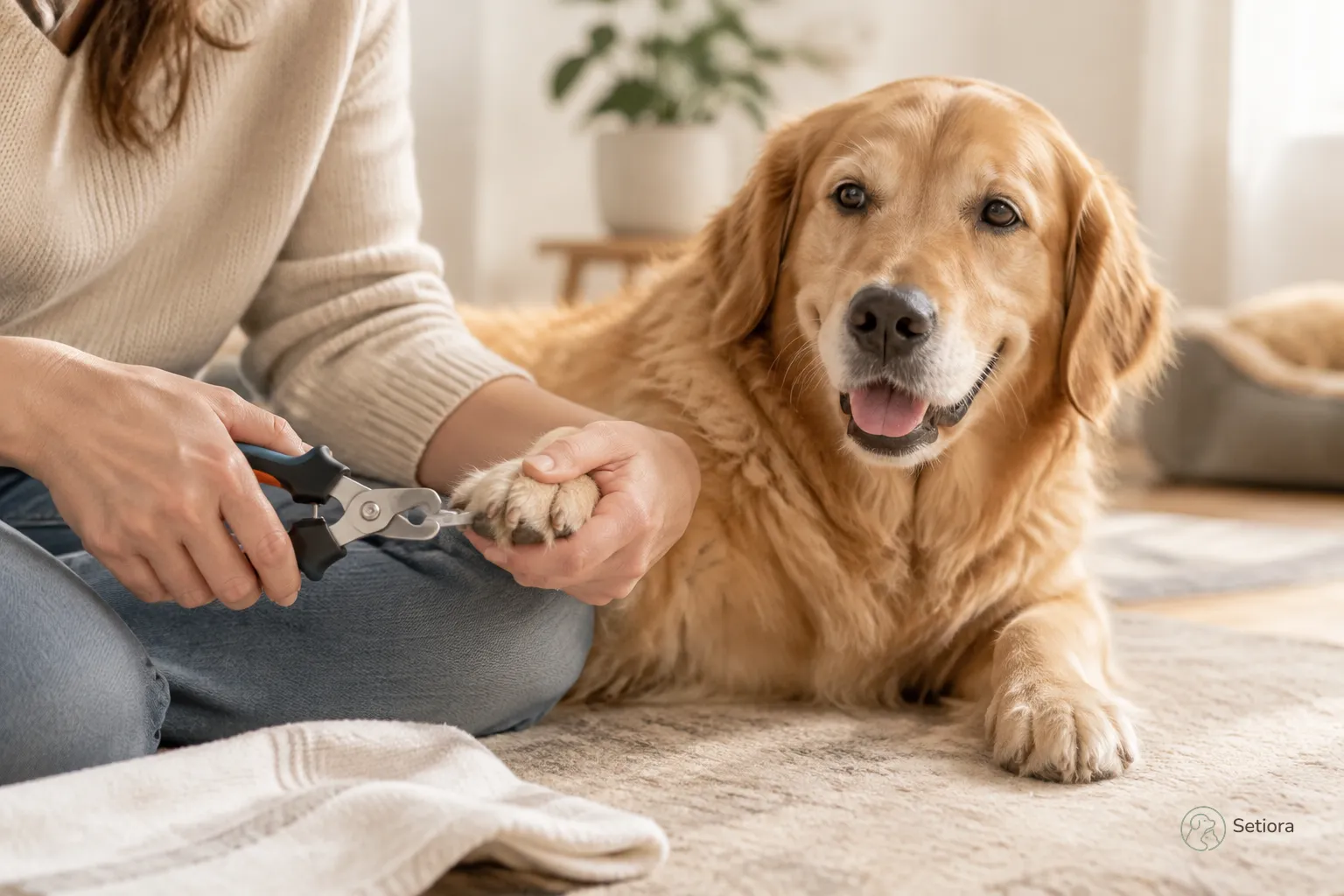
Your dog hears the clippers come out and immediately disappears under the table. Or maybe you make one careful snip, see a little blood, and decide nail trimming is best left to someone else.
You can absolutely ask a groomer or veterinarian for help. But with the right tools, a calm approach, and a little practice, many owners can learn safe dog nail trimming at home. These dog nail trimming tips will help you understand the quick, choose between clippers and a grinder, handle small accidents, and make future sessions less stressful.
Why Regular Nail Trimming Matters
Overgrown nails are more than a cosmetic issue. Very long nails can interfere with normal foot placement and may cause structural changes in the foot, according to VCA Animal Hospitals. They can also:
- Change the way your dog stands and walks
- Make comfortable walking more difficult
- Snag on carpets, furniture, or outdoor surfaces
- Split or break painfully
- Curl into the paw pad
- Make it harder for your dog to maintain comfortable footing
Some dogs naturally wear their nails down on pavement and other hard surfaces. Others spend more time on grass, carpets, or soft ground and need regular trimming. Checking your dog's nails every week or two helps you notice changes before they become a problem.
If you struggle to remember when to trim, consider building a simple schedule that fits your life—see our guide on building a pet health routine that actually sticks for tips on making grooming part of your regular care plan.
Understanding the Quick
A dog's nail has a hard outer shell and a softer inner area called the quick. The quick contains blood vessels and nerves, so cutting into it can cause pain and bleeding.
With light-colored nails, the quick is often visible as a pink area inside the nail. Leave some space between your cut and the end of the quick.
Dark or black nails require more patience because the quick may not be visible from the side. Trim only a small amount at a time. As you shorten the nail, look at the freshly cut surface. A pale center may gradually become darker, and a small dark dot can indicate that you are getting close to the quick. Stop before cutting further.
Dewclaws deserve special attention. Because they often do not touch the ground, they may become overgrown and curl into the paw pad, as VCA explains.
How Often Should You Trim Your Dog's Nails?
There is no single schedule that suits every dog. Nail growth and natural wear depend on:
- How active your dog is
- Whether they walk on pavement, grass, or soft ground
- Age and mobility
- Breed and genetics
- The shape of their feet and nails
A useful cue is when the nails touch the ground while your dog is standing. Clicking on a hard floor can prompt you to check, but it does not by itself mean the nails need trimming; natural wear varies between dogs. If you are unsure, ask your veterinarian or groomer for guidance. Blue Cross explains how to assess nail length and when to seek advice.
Some dogs need a trim every few weeks, while others may go longer between sessions. Regular checks are more useful than following a fixed calendar.
For puppies, start early with short, positive sessions so trimming becomes normal; our new pet checklist for the first 30 days has practical steps to begin good grooming habits from day one.
Choose the Right Nail-Trimming Tools
Having the right equipment makes the process easier and reduces the chance of crushing or splitting the nail.
Clippers
- Scissor-style clippers: Often provide good control, especially for larger or thicker nails.
- Guillotine clippers: Some single-blade guillotine styles can crush the nail instead of cutting it cleanly. VCA advises avoiding those designs.
- Nail file: Useful for smoothing sharp edges after clipping.
Use sharp, clean clippers. Dull blades can crush the nail instead of cutting through it cleanly.
Nail Grinders
A grinder, sometimes called a Dremel-style tool, removes small amounts of nail gradually. It can help reduce splitting and is useful for carefully shortening dark nails.
However, grinders are noisy and can become warm. Keep the tool moving, work in short bursts, and pause every few seconds. A grinder is not automatically safer than clippers; it still requires proper technique and a dog who can tolerate the sound and sensation.
Supplies to Keep Nearby
Before you start, gather:
- Styptic powder or a styptic stick
- Cornstarch as a backup for minor bleeding
- High-value treats
- A towel or non-slip mat
- Good lighting
- A nail file
- An assistant, if your dog needs gentle support
If you want a printable list to keep with your grooming supplies, our pet health record checklist (free printable) is a handy resource to store supplies and emergency contact details.
How to Trim Dog Nails Safely: Step by Step
1. Choose a Calm Moment
Trim after a relaxed walk or gentle play session when your dog is more likely to settle. Choose a quiet, well-lit area with a surface that gives your dog secure footing.
Do not begin when either of you is rushed. A calm session with only one or two nails is more useful than a stressful attempt to finish all four paws.
2. Let Your Dog Inspect the Tools
If your dog is nervous, place the clippers or grinder on the floor and reward calm investigation. With a grinder, turn it on several feet away for a moment, then reward your dog if they remain relaxed. Gradually bring it closer over several sessions.
You do not need to complete the whole process in one day. Handling practice is part of nail care.
3. Hold the Paw Gently
Support the paw in your hand without squeezing. Use your thumb and forefinger to extend one nail while keeping the other toes steady.
Some dogs are more comfortable with their paw held from the side. Others relax when you lightly support the leg above the paw. Try different positions, but never twist a leg or force a painful joint into place.
If your dog pulls away repeatedly, stop and reset. Rough restraint can make future handling more difficult.
4. Trim a Small Amount
For a light-colored nail, identify the pink quick and leave a safe margin. Position the clippers slightly downward, following the natural curve of the nail rather than cutting straight across with heavy pressure.
For a dark nail, take very small slices from the end. Check the cut surface after each snip. If you are unsure how much to remove, cut less.
Important: You do not need to shorten an overgrown nail dramatically in one session. Trimming a little at a time and repeating the process regularly allows the quick to gradually move back.
5. Use a Grinder Carefully
If you use a grinder:
- Start with the lowest comfortable speed
- Touch the nail briefly, then lift the tool
- Keep it moving to prevent heat buildup
- Remove only a small amount at a time
- Pause often to check the nail and reward your dog
- Avoid holding the grinder against the nail continuously
The noise and vibration may be too much for some dogs. If your dog shows increasing fear, switch to a different approach or ask a professional for help. Grinders can get hot, so work in brief passes and keep hair away from the tool; the AKC's nail-care guidance notes both risks.
6. Finish and Reward
Smooth rough edges with a file if needed. Then give your dog a valuable treat, praise, or a favorite calm activity.
End the session while your dog is still coping well. For an anxious dog, trimming one to three nails may be a successful session. You can continue another day.
What to Do If You Cut the Quick
Even careful owners occasionally cut too close. If a nail begins to bleed:
- Stay calm and keep your dog still without scolding.
- Apply gentle, steady pressure with clean gauze or a cloth.
- Press styptic powder onto the nail.
- If you do not have styptic powder, cornstarch may help with minor bleeding.
- Continue pressure for several minutes and keep your dog quiet afterward.
A styptic stick can also help, although some dogs dislike the sensation. Keep these supplies ready before trimming rather than searching for them after an accident.
Contact your veterinarian if the bleeding does not stop, the nail is badly damaged, your dog seems to be in severe pain, or your dog develops ongoing lameness or swelling. VCA's guide to trimming a dog's nails recommends styptic powder, flour, or cornstarch for a minor quick nick.
If you frequently find yourself scrambling for records or emergency contacts after an incident, our pet emergency folder checklist explains what to have prepared so you can act quickly.
Helping a Nervous Dog Accept Nail Care
Many dogs do not fear nail trimming itself at first. They fear having their paws held, the sound of the clippers, or a previous painful experience. You can rebuild comfort through gradual desensitization and positive reinforcement.
Try this plan:
- Touch your dog's shoulder, then offer a treat.
- Move your hand down the leg and reward calm behavior.
- Briefly touch a paw, then release it and reward.
- Hold one toe for a second without trimming.
- Show the clippers and give a treat.
- Touch the clippers to the nail without cutting.
- Make one small trim, then stop and celebrate.
Keep sessions short and repeat them frequently. High-value treats can help your dog form a new association with paw handling. For dogs who show fear, VCA's nail-trimming stress guidance advises moving in small steps, watching body language, and pausing rather than forcing the process.
Never force a dog into a prolonged struggle. If your dog growls, snaps, panics, or cannot be safely controlled, stop the session. A professional groomer, veterinary team, or qualified behavior professional can help create a safer plan. In some cases, a veterinarian may discuss medication or sedation for grooming-related fear.
Special Situations to Consider
- Puppies: Start with gentle paw handling early, before you need a full trim. Short, positive sessions build useful habits.
- Senior dogs: Arthritis can make certain positions uncomfortable. Support your dog carefully and ask your veterinarian about safer positioning if movement causes pain.
- Black nails: Trim in tiny increments and inspect the cut surface after each one. A grinder may make gradual shortening easier, but it still needs careful handling.
- Dewclaws: Check them regularly because they may not wear down naturally.
- Broken or ingrown nails: Do not try to repair a severely damaged nail at home. A veterinarian should assess it.
- Fast-growing nails: Some dogs simply need more frequent checks, especially if they spend little time on hard surfaces.
- Dogs with paw pain: Nail trimming may be harder when a dog already has an injury or sore joints. Address the underlying discomfort first.
When to Get Professional Help
Ask a groomer or veterinarian to trim your dog's nails when:
- You cannot hold the paw safely
- Your dog is aggressive, panicked, or impossible to settle
- A nail is split, infected, badly broken, or growing into the pad
- The quick is exposed
- Your dog is limping after a nail injury
- Bleeding continues despite pressure and styptic treatment
- Your dog has severe arthritis or another condition affecting positioning
- You are simply uncomfortable doing it yourself
Using professional help is not a failure. Keeping both you and your dog safe is the priority.
If you're unsure what to bring to a vet visit for a stubborn nail injury or other grooming-related concern, our quick guide on 10 things your vet wishes you'd bring to every appointment can help you arrive prepared.
Common Nail-Trimming Mistakes
Avoid these frequent problems:
- Trying to remove too much nail in one session
- Working in poor lighting
- Using dull or dirty clippers
- Holding the paw too tightly
- Ignoring dewclaws
- Skipping rewards and breaks
- Assuming grinders cannot cause pain or heat
- Continuing after your dog is clearly distressed
- Waiting until nails are severely overgrown before checking them
Frequently Asked Questions
Can I use human nail clippers on my dog?
Human nail clippers are generally not designed for dog claws. PDSA advises using dog-specific clippers, noting that human clippers can squash or split a dog's nail. If your dog is very small or you are unsure which tool fits their nails, ask your veterinarian or groomer.
Can black dog nails be trimmed safely?
Yes. Trim very small amounts and examine the nail after each cut. Stop when you see signs that you are approaching the quick. If you are uncertain, a professional can show you the right technique.
Are grinders safer than clippers?
Not always. Grinders can reduce splitting and allow gradual removal, but they create noise, vibration, and heat. Clippers can be faster when used correctly. Choose the tool your dog and you can handle calmly.
How can I help overgrown nails get shorter?
Avoid cutting a large amount at once. Trim small amounts regularly, allowing the quick to gradually recede. A groomer or veterinarian can help if the nails are severely overgrown.
Final Takeaway
Safe dog nail trimming is mostly about patience, preparation, and knowing when to stop. Check nails regularly, trim in small increments, keep styptic powder nearby, and reward calm behavior throughout the process.
Keeping grooming notes and reminders organized can make it easier to notice when your dog is due for a trim. Setiora helps you keep those care routines, health details, and reminders together, so nail care becomes a manageable part of your dog's regular routine rather than an emergency task.
Not veterinary advice
This article is for general educational purposes only and isn't a substitute for individualized guidance from a licensed veterinarian. Always consult your vet before starting, changing, or stopping any vaccination, medication, or treatment for your pet, and seek immediate veterinary or emergency care for urgent symptoms.
Track your pet's health with Setiora
Log vaccinations, medications, weight, and vet visits — all offline, all organised.
Join Waitlist →