
Emergencies rarely happen at a convenient time. A sudden collapse, a swallowed object, a car accident, a severe allergic reaction — in these moments, the last thing you want to do is dig through drawers looking for your vet's phone number or trying to remember your pet's last vaccination date.
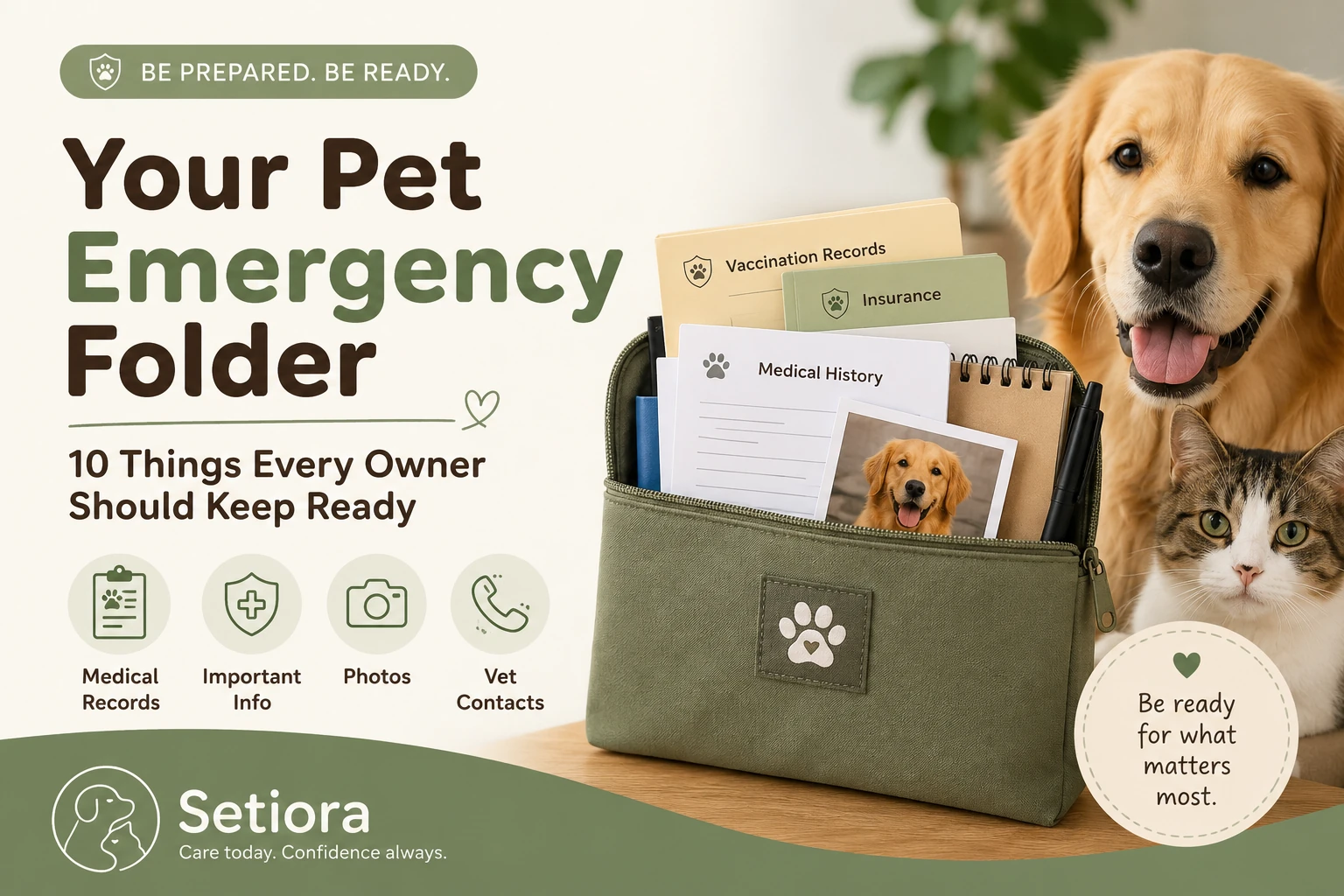
A pet emergency folder solves this problem. It's a single, organized place — paper, digital, or both — that holds everything a vet, an emergency clinic, or even a pet sitter would need to help your pet quickly. Here are the 10 things every folder should include.
1. Vaccination Records
Why it's important: Emergency vets often ask for vaccination history immediately, especially before any procedure, boarding, or if your pet has bitten someone or been bitten. Without proof, a clinic may need to treat your pet as unvaccinated, which can mean extra precautions or delays.
What to include:
- Rabies
- Core vaccines
- Last vaccination date
Quick Tip: Keep both the vaccination card and any digital copies.
2. Your Regular Veterinarian's Contact Details
Why it's important: Your regular vet knows your pet's history better than anyone. In an emergency, another clinic may need to call them directly for records or guidance.
What to include:
- Clinic name
- Vet name
- Phone number
- Address
Quick Tip: Save the number in your phone favorites.
3. Nearest 24-Hour Emergency Animal Hospital
Why it's important: This is different from your normal vet. Most regular clinics close overnight and on weekends, and many owners don't know where the nearest 24-hour hospital is until they need it — which is exactly the wrong time to find out.
What to include:
- Address
- Phone
- Directions
4. Current Medications
Why it's important: Guessing dosages or names during an emergency can lead to dangerous drug interactions. A clear, accurate list avoids that risk entirely.
What to include:
- Medication name
- Dosage
- Frequency
- Start date
Quick Tip: Update this list the same day any prescription changes.
5. Known Allergies
Why it's important: Allergies — to food, medication, or environmental triggers — can complicate emergency treatment if a vet isn't aware of them. Listing them upfront prevents avoidable reactions and treatment delays.
What to include:
- Food allergies
- Medication allergies
- Environmental allergies
6. Microchip Information
Why it's important: Many owners remember their pet is microchipped — but not the actual number or which registry it's with. If your pet goes missing or is found by someone else, this information is what reunites you.
What to include:
- Microchip number
- Registration company
- Contact details
Quick Tip: Confirm your registration details are current, especially after a move.
7. Insurance Information
Why it's important: Emergencies are stressful enough without searching for policy numbers while a vet is waiting for payment authorization. Having this ready speeds up treatment approval.
What to include (if applicable):
- Provider
- Policy number
- Claim contact
8. Medical History
Why it's important: A new veterinarian — whether at an emergency clinic or after a move — can understand your pet's situation far faster with a documented history instead of starting from zero.
What to include:
- Previous surgeries
- Chronic illnesses
- X-rays
- Blood work
- Previous treatments
Quick Tip: Ask your vet for copies of major test results so you always have your own record.
9. Recent Photos
Why it's important: Surprisingly, photos are one of the most overlooked items — and one of the most useful.
What to include:
- Full body
- Side profile
- Close-up face
Useful if:
- Your pet gets lost
- Identification is needed
- You need to show changes in an injury or swelling over time
10. Important Notes
Why it's important: This is a catch-all section for details that don't fit elsewhere but can meaningfully change how someone cares for your pet in your absence.
Examples:
- Feeding schedule
- Behavior around strangers
- Anxiety triggers
- Emergency contacts
- Blood type (if known)
Paper vs Digital Emergency Folder
| Paper Folder | Digital Folder |
|---|---|
| Can be forgotten | Always with you |
| Can get damaged | Backed up |
| Hard to update | Easy to edit |
| Only one copy | Accessible anytime |
| Difficult to share | Easy to share |
Neither format is perfect on its own. A paper folder works even without power or signal, while a digital copy travels with you and updates instantly. Having both is ideal — the paper version as a backup, the digital version as your day-to-day reference.
Keep It Updated
An emergency folder is only useful if it reflects your pet's current situation. Review it every six months and check off:
- Vaccinations updated
- Medication list updated
- New photos
- Insurance renewed
- Vet information verified
How Setiora Can Help
Many pet owners start with a paper folder, but paper isn't always available when emergencies happen.
With Setiora, you can securely keep vaccination records, allergies, medications, insurance information, health history, vet contacts, important documents, and pet photos together in one place. Because Setiora is built offline first, your pet's information remains available even when you don't have an internet connection.
Free Download
Get started with our free Pet Emergency Folder resource:
⬇ Download the PDFThe free PDF includes:
- Emergency Folder Checklist
- Emergency Contact Sheet
- Medical Information Sheet
- Six-Month Review Checklist
Conclusion
You can't predict when an emergency will happen. But you can decide whether you'll spend those first critical minutes searching for information — or helping your pet.
Taking just 15 minutes today to prepare an emergency folder could make one of the most stressful moments of pet ownership much more manageable.
Not veterinary advice
This article is for general educational purposes only and isn't a substitute for individualized guidance from a licensed veterinarian. Always consult your vet before starting, changing, or stopping any vaccination, medication, or treatment for your pet, and seek immediate veterinary or emergency care for urgent symptoms.
Track your pet's health with Setiora
Log vaccinations, medications, weight, and vet visits — all offline, all organised.
Join Waitlist →