
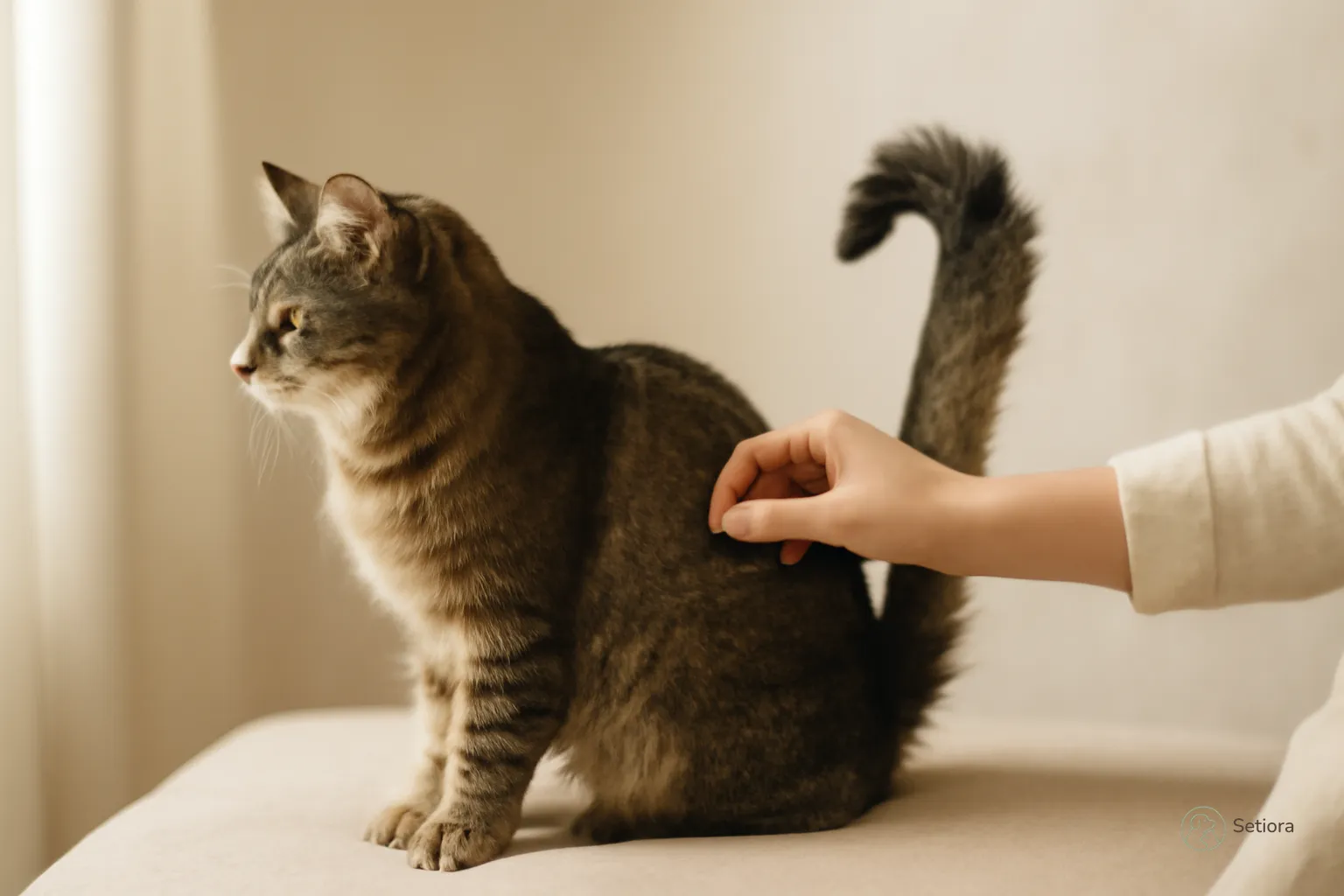
Your cat walks into the room with their tail held high, then suddenly starts flicking the tip while you pet them. Are they happy, annoyed, or about to leave? Cat tail language can offer useful clues, but a tail never tells the whole story on its own.
Reading a cat's tail alongside their ears, eyes, whiskers, posture, and vocalizations helps you understand what they may be feeling. Here's how to recognize common cat tail signals and respond in a way that keeps your cat comfortable.
Understanding Cat Body Language
Cats communicate through several signals at once. Their tail is one of the easiest to notice, but it works together with:
- Ear position
- Eye shape and pupil size
- Whisker position
- Fur and skin movement
- Body posture
- Facial expression
- Vocalizations
- Scent marking and other behaviors
The same tail movement can mean different things in different situations. A slow swish during play may show intense concentration, while the same movement during petting may mean your cat is becoming overstimulated.
The most useful rule: Read the whole cat, not just the tail.
Why Cats Use Their Tails
A cat's tail helps with balance when walking along narrow surfaces, jumping, climbing, and changing direction. It also communicates social information to people and other animals.
Different parts of the tail can move independently. The base may stay still while the tip twitches, or the entire tail may whip from side to side. These differences matter when you're reading cat tail language.
Your cat's normal movements also depend on what they are doing. A tail held out for balance during a jump should not be interpreted the same way as a tail held low while your cat is hiding.
Common Cat Tail Signals Explained
Tail Held High
A tail held vertically is often a friendly, confident signal. Many cats greet familiar people and animals with their tail straight up.
You may see this when your cat:
- Walks toward you after you come home
- Enters a room where a familiar person is sitting
- Approaches another friendly cat
- Wants attention or social interaction
A high tail does not always mean your cat wants to be picked up or petted. It usually suggests they feel comfortable enough to approach, so let them choose how much interaction they want.
Tail With a Curved or Hooked Tip
A tail with a slight curve at the top can look like a question mark. This commonly signals friendly interest, confidence, or an affectionate greeting.
Your cat may use this posture when they are curious about what you're doing or inviting a calm interaction. Offer a hand for them to sniff rather than reaching suddenly over their head.
Tail Held High With a Raised Tip
A vertical tail with a slightly raised or moving tip often works as a feline “hello.” It may appear when your cat greets you or pauses near another trusted animal.
Look for relaxed ears, a loose body, and soft eyes to confirm that the greeting is friendly.
Relaxed Tail
A tail hanging naturally or resting loosely usually indicates a calm or neutral state. Your cat may be content, resting, or simply focused on something ordinary in their environment.
A relaxed tail does not necessarily mean your cat wants to be touched. Check their posture and facial expression before continuing to pet them.
Slowly Swishing Tail
A gentle, slow movement can mean your cat is concentrating, watching something, or mildly irritated. Cats often swish their tails while tracking a toy, observing a bird through the window, or deciding whether to approach something unfamiliar.
During petting, a slow swish may be an early sign that your cat has had enough. Pause and see what they do next.
Twitching Tail Tip
A quick flick at the tip can indicate curiosity, focused attention, or mild irritation. You might notice it while your cat watches prey, listens to a new sound, or studies an unfamiliar object.
A twitching tip is not automatically a sign that your cat wants to play. If it appears with a crouched body and fixed stare, your cat may be in hunting mode. If it appears with flattened ears or a tense posture, they may be becoming uncomfortable.
Tail Held Low
A tail held low and close to the body may signal uncertainty, anxiety, or caution. Your cat may take this posture around strangers, unfamiliar animals, loud noises, or new surroundings.
Give your cat time and space to decide whether they want to approach. Avoid following them into a hiding place or forcing them into your arms.
Tail Tucked Under the Body
A tightly tucked tail typically suggests fear, submission, or distress. This posture often appears when a cat feels threatened or overwhelmed.
Your response should be quiet and predictable:
- Reduce noise and movement
- Give your cat an escape route
- Move other pets away if possible
- Avoid reaching toward or restraining them
- Allow them to hide somewhere safe
Puffed-Up Tail
When a cat's fur stands out from their tail, the behavior is called piloerection. It makes the tail look larger and usually means the cat is frightened, startled, or trying to appear more intimidating.
A puffed tail is defensive, not a sign that your cat is excited to meet you. An arched back, sideways stance, hissing, or flattened ears may appear at the same time. Give your cat plenty of space until their body relaxes.
Thrashing or Whipping Tail
Rapid tail whipping often signals annoyance, agitation, or rising arousal. It can happen when your cat is being petted for too long, watching another animal, or feeling trapped.
Treat vigorous tail movement as a warning to pause. Continuing to touch or approach a tense cat can lead to a swat or bite.
Tail Wrapped Around You or Another Cat
When a cat wraps their tail around a person or another cat, it can be a social and affectionate gesture. It is similar to placing an arm around someone.
This behavior generally suggests comfort and bonding, especially when paired with a relaxed body and soft eyes. Enjoy the interaction without holding your cat in place.
Read the Whole Cat
Tail language in cats becomes much easier to understand when you combine several signals.
Friendly and Relaxed
- Tail upright or gently curved
- Ears facing forward or resting naturally
- Soft eyes or slow blinks
- Loose body posture
- Quiet purring or a gentle greeting
This combination usually suggests your cat feels comfortable. You can offer calm attention and let them decide whether to come closer.
Overstimulated or Irritated
- Tail flicking or swishing repeatedly
- Ears turning sideways or backward
- Tense body
- Skin twitching along the back
- Looking back at your hand
Stop petting and give your cat a chance to move away. Many cats communicate discomfort before they escalate to a swat.
Frightened and Defensive
- Tail puffed or tightly tucked
- Arched back
- Flattened ears
- Dilated pupils
- Hissing, growling, or spitting
Do not approach a cat displaying these signals. Give them distance, remove the stressor if you can do so safely, and wait for their posture to soften.
Focused on Hunting or Play
- Tail held low or twitching at the tip
- Crouched posture
- Focused stare
- Weight shifted onto the back legs
- Sudden pauses followed by a pounce
This can be normal play or hunting behavior. Keep hands out of the way and use a toy instead. If play turns into tail lashing, flattened ears, or biting, end the session calmly.
Age, Breed, and Personality Matter
Every cat has an individual baseline. One cat may greet everyone with a high tail, while another prefers to observe from a distance. Learning what is normal for your cat makes changes easier to spot.
Kittens can be expressive and unpredictable as they learn social skills. Older cats may move more carefully or show subtler signals. Cats with short or naturally curled tails, including some bobtail breeds, may give you less information through tail position, so weigh their ears, eyes, whiskers, and posture more heavily.
A cat's tail can also look different because of injury, pain, or a medical condition. A sudden change in tail carriage deserves attention, particularly if it appears with limping, difficulty jumping, incontinence, sensitivity, or obvious discomfort.
What to Do in Common Situations
When You Come Home
If your cat approaches with an upright tail and a relaxed body, greet them quietly. Offer a hand to sniff and let them choose whether they want petting.
During Petting
Watch for tail flicking, skin twitching, ears turning back, or your cat repeatedly looking at your hand. These signs often mean it is time to stop. Respecting that signal helps your cat trust you.
If your cat starts hiding, showing persistent changes in posture, or seems uncomfortable around routine handling, it may help to track those changes and your care steps — keeping a simple timeline or checklist can make vet visits more informative. See our Pet Health Timeline Every Owner Should Keep for what to record and why it helps.
When Meeting an Unknown Cat
Do not walk directly toward a cat with a low, tucked, or puffed tail. Turn slightly sideways, avoid staring, and allow the cat to decide whether to come closer. Never corner or attempt to handle a fearful unfamiliar cat.
During Play
Use wand toys, balls, or other objects that keep teeth and claws away from your hands. Stop if your cat's tail begins lashing rapidly or their ears flatten. A short break can prevent play from becoming overwhelming.
If you find your cat is frequently overstimulated during play or handling, building consistent daily habits can reduce stress and make signals easier to read — our guide on Building a Pet Health Routine That Actually Sticks has simple steps to help make calm interactions part of your day.
When Introducing a New Pet
A low or puffed tail, hiding, hissing, or repeated tail thrashing means the introduction is moving too quickly. Separate the animals and return to slower, gradual steps. Cats need time to adjust to new scents, sounds, and routines.
Cat Tail Language Quick Reference
- Upright tail: Usually friendly, confident, or greeting
- Curved or hooked tip: Friendly interest or affection
- Relaxed tail: Calm or neutral
- Slow swish: Concentration or mild irritation
- Twitching tip: Focused attention, curiosity, or irritation
- Low tail: Uncertainty or caution
- Tucked tail: Fear, submission, or distress
- Puffed tail: Frightened and defensive
- Rapid thrashing: Agitation; give space
- Tail wrapped around you: Social bonding or affection
These are useful starting points, not absolute rules. Context always matters.
When to Ask for Help
Occasional tail flicking, hiding, or puffing can happen in stressful situations. However, frequent or sudden changes should not be ignored.
Speak with your veterinarian if your cat has:
- A sudden change in tail position or movement
- Persistent tail-tucking or puffing
- Frequent aggression without an obvious trigger
- Pain when the tail or lower back is touched
- Trouble walking, jumping, or using the litter box
- Limping, weakness, or changes in bladder or bowel control
Pain, injury, neurological problems, and other health concerns can affect how a cat holds or moves their tail. A veterinarian can help determine whether a behavior change is emotional, medical, or both. For guidance on what to bring to the vet to make that visit more productive, check our checklist of 10 Things Your Vet Wishes You'd Bring to Every Appointment.
Helping You Understand Your Cat
Reading your cat's tail is less about memorizing a fixed dictionary and more about noticing patterns. Watch what happens before and after each signal. Learn your cat's usual posture, respect early signs of discomfort, and give them room to communicate without forcing interaction.
Keeping notes about behavior changes, veterinary visits, medications, and daily routines can make those patterns easier to recognize. Setiora helps you keep your cat's important care information organized, so you can focus on the small signals that build trust every day.
A raised tail may be a hello. A flick may be a warning. When you learn to read the whole cat, both become easier to understand.
Not veterinary advice
This article is for general educational purposes only and isn't a substitute for individualized guidance from a licensed veterinarian. Always consult your vet before starting, changing, or stopping any vaccination, medication, or treatment for your pet, and seek immediate veterinary or emergency care for urgent symptoms.
Track your pet's health with Setiora
Log vaccinations, medications, weight, and vet visits — all offline, all organised.
Join Waitlist →