
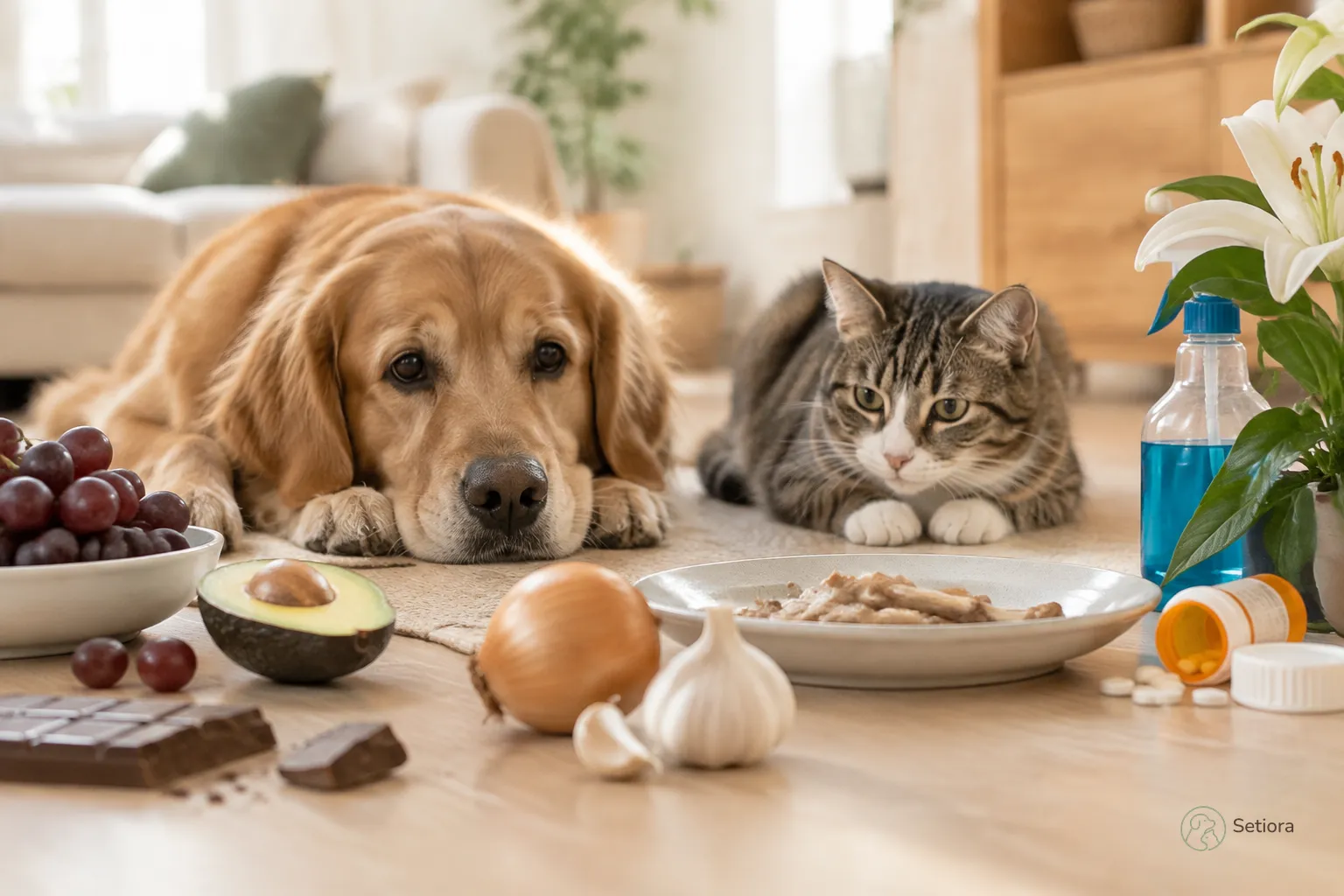
Your dog grabs something from the kitchen floor. Your cat bats a houseplant off the windowsill. In many homes, these moments seem harmless — until the item turns out to contain a toxic ingredient.
Knowing common hazards, recognizing poisoning symptoms, and acting quickly can make a meaningful difference. Some exposures cause immediate signs, while others can affect the kidneys, liver, or blood cells after a delay. The Cornell College of Veterinary Medicine's toxin list notes that suspected exposures should be discussed with a veterinarian or animal poison service.
Why Poisoning Risk Differs Between Dogs and Cats
Toxicity depends on more than what your pet ate. The substance, amount, your pet's size, age, health, and medications all matter. Dogs and cats also process certain compounds differently.
Some species-specific risks stand out: lilies can cause life-threatening kidney injury in cats, even after a small exposure, and human medications or flea products made for dogs can be acutely dangerous to cats. See the Cornell Feline Health Center's cat-hazard guidance.
A pet may look normal after eating something dangerous. That does not always mean the risk has passed. Some toxins cause delayed symptoms, so contact your veterinarian or an animal poison service as soon as you know — or suspect — an exposure.
Food Hazards: Toxic Foods and Other Risks
These foods do not all pose the same kind of risk. Chocolate and caffeine, grapes and raisins, xylitol, alliums, and alcohol are recognized toxin hazards; raw yeast dough can also expand and produce alcohol. Dairy more commonly causes digestive upset, fatty foods may trigger gastrointestinal problems or pancreatitis, and bones or pits can injure or obstruct the digestive tract. Avocado risk varies by species: the ASPCA's food guidance describes its greatest persin concerns in other animal species, while Cornell lists avocado among cat hazards. Do not assume an item is safe based on a previous uneventful exposure; ask a veterinarian about the specific product, species, and amount.
Chocolate and Caffeine
Chocolate contains theobromine and caffeine, which can affect the heart and nervous system. Dark chocolate, baking chocolate, cocoa powder, and some specialty desserts contain more of these compounds than milk chocolate.
Possible signs include:
- Vomiting or diarrhea
- Restlessness or panting
- Fast or irregular heartbeat
- Tremors
- Seizures
- Collapse
Milk chocolate is less concentrated, but it is not automatically safe. The risk depends on the type and amount eaten relative to your pet's size. Coffee grounds, tea bags, energy drinks, caffeine tablets, and caffeinated baked goods can also be dangerous.
The Merck Veterinary Manual's food-hazard guidance explains how theobromine and caffeine affect pets and why darker chocolate and cocoa products can pose greater risk.
Save the package and call your veterinarian promptly rather than waiting for symptoms.
Grapes and Raisins
Grapes and raisins can cause serious kidney injury in dogs, and potentially in cats. Sensitivity varies, and the amount that causes illness cannot be predicted reliably for every pet.
Watch for:
- Vomiting
- Loss of appetite
- Lethargy
- Increased thirst or urination
- Reduced urination
- Weakness
Grapes may be hidden in trail mix, fruitcake, cereal, snack bars, and baked goods. Any known ingestion deserves a prompt call to your vet, even if your pet seems well.
The Merck Veterinary Manual reports kidney injury in some dogs and one reported cat case, with effects varying between exposures.
Xylitol
Xylitol is an artificial sweetener found in some sugar-free gum, candies, baked goods, toothpaste, mouthwash, supplements, and medications. It can cause a rapid release of insulin in dogs, leading to dangerously low blood sugar. It may also injure the liver.
Signs can include:
- Weakness or wobbliness
- Vomiting
- Tremors
- Collapse
- Seizures
The best-documented severe effects are in dogs, but call a veterinarian about any suspected exposure because products and amounts vary. Check ingredient labels carefully and seek guidance immediately.
The Merck Veterinary Manual describes rapid low blood sugar and possible liver injury from xylitol in dogs; Cornell also lists xylitol as a potential dog toxin.
Onions, Garlic, and Chives
Onions, garlic, leeks, and chives belong to the allium family. They can damage red blood cells and cause hemolytic anemia, meaning the cells break down faster than the body can replace them.
Cats are particularly sensitive. Risk can come from raw, cooked, dried, or powdered ingredients in:
- Broths and gravies
- Seasoning mixes
- Baby food
- Sauces
- Table scraps
- Garlic supplements
Signs may be delayed and include weakness, pale gums, rapid breathing, reduced appetite, or dark urine. Repeated small exposures can also add up, so regular table scraps containing onion or garlic should be avoided.
The ASPCA's people-food guide notes that alliums can irritate the gut and damage red blood cells, with cats more susceptible and dogs also at risk depending on amount.
Alcohol and Yeast Dough
Alcohol can cause vomiting, poor coordination, slowed breathing, low body temperature, and dangerous changes in blood sugar. Keep alcoholic drinks, alcohol-containing desserts, and cooking ingredients out of reach.
Unbaked yeast dough creates a second risk. It can expand in the stomach and produce alcohol as it ferments, potentially causing bloating and intoxication. Contact a vet promptly if your pet eats raw dough.
The ASPCA's food-hazard guidance describes alcohol toxicity and the bloating and alcohol risks from yeast dough.
Macadamia Nuts
Macadamia nuts can cause weakness, tremors, vomiting, and overheating in dogs. The mechanism is not fully understood, and reports in cats are uncommon, but macadamias should not be offered to either species.
Nut mixes can also contain raisins, chocolate, or heavily salted ingredients, creating additional hazards. The Merck Veterinary Manual reports macadamia-related illness in dogs.
Avocado, Fatty Foods, and Table Scraps
Avocado risk differs across species and sources: the ASPCA notes its most serious persin effects in other animals, but also warns that the fat may cause digestive upset or pancreatitis in dogs and cats and that the pit can obstruct the intestine. Cornell includes avocado among cat hazards, so contact a veterinarian about a suspected exposure rather than assuming it is harmless. See the ASPCA's avocado guidance and Cornell's cat-hazard list.
Fatty meats, gravy, bacon, fried food, and large portions of leftovers can also lead to vomiting, abdominal pain, or pancreatitis. Bones are another food hazard: they may injure or obstruct the digestive tract. The ASPCA's people-food guide describes these distinct risks.
If you track your pet's weight or follow their diet closely, small but consistent increases after holiday meals can signal a problem — see our guide on How to Track Your Cat's Weight at Home (And Why It Matters) for tips that help spot changes early.
Salt and Salty Snacks
Large amounts of salt, including salt dough or rock salt, can cause dangerous changes in blood sodium. Signs may include vomiting, weakness, poor coordination, tremors, or seizures. Keep salt dough, seasoning packets, chips, cured meats, and other salty foods away from pets.
Do not try to dilute a suspected salt exposure with home remedies. Call your veterinarian for specific guidance. The Merck Veterinary Manual's salt-toxicosis guide describes the risk from excess sodium and the need for veterinary care.
Dairy
Milk and other dairy products are not usually poisonous, but many adult dogs and cats have difficulty digesting lactose. The result is more commonly gas, diarrhea, or stomach discomfort.
A small amount may not cause a problem for every pet, but dairy should not replace a balanced diet or be used as a treatment for another poisoning. The ASPCA notes that milk and dairy can cause digestive upset rather than treating poison exposure.
Household Hazards Beyond Food
The kitchen is not the only place poisoning can happen. Check these areas regularly:
- Human medications: Acetaminophen can be especially dangerous to cats. Ibuprofen, naproxen, antidepressants, ADHD medications, sleep aids, and many other drugs can seriously harm pets, sometimes in small amounts. See Merck's guides to human prescription drugs and ADHD drugs.
- Antifreeze: Ethylene glycol may initially resemble alcohol intoxication, sometimes followed by a brief apparent improvement before severe kidney failure develops. A spill can be dangerous, so keep products locked away and clean leaks immediately. See the Merck Veterinary Manual's ethylene glycol guide.
- Rodent baits: Different active ingredients can cause different effects, including internal bleeding, seizures, or kidney injury. Bring the packaging or a clear photo of the label; the Merck Veterinary Manual's rodenticide guide describes these product-specific risks.
- Insecticides and fertilizers: Risks vary by active ingredient. Some insecticides can cause drooling, tremors, poor coordination, seizures, or breathing problems; Cornell lists fertilizers among garden hazards. See Merck's insecticide-poisoning guidance and Cornell's garden-hazard list.
- Cleaners and disinfectants: Bleach, detergents, drain cleaners, and other caustic products can burn the mouth, throat, skin, or eyes.
- Plants: True lilies (Lilium spp.) and daylilies (Hemerocallis spp.) can cause life-threatening kidney injury in cats; other plants with “lily” in the name do not carry the same risk. Sago palms are especially dangerous to dogs, while oleander can poison dogs and cats. Check the exact plant species against the Merck Veterinary Manual's plant-toxicity guide.
- Essential oils and topical products: Some concentrated oils and flea products intended for dogs can be toxic to cats. Never apply a product to a pet unless it is labeled for that species and your veterinarian agrees it is appropriate.
- Batteries: Chewed or swallowed batteries can cause burns, obstruction, or heavy-metal exposure.
These are examples, not a complete list. The Merck Veterinary Manual's household-hazard guide and Cornell's small-animal toxin list document risks from medications, cleaners, pesticides, antifreeze, batteries, and other household products. For cats, Cornell's common-hazards guide highlights lilies, medications, dog flea products, and household chemicals.
Before travel or hosting guests, use a checklist to pack and secure medication, documents, and emergency contacts — our Complete Pet Travel Checklist: What to Pack covers common items people forget.
Pet Poisoning Symptoms to Watch For
Symptoms vary by toxin and may appear immediately or after a delay. Possible warning signs include:
- Vomiting, diarrhea, or excessive drooling
- Loss of appetite or abdominal pain
- Weakness, unusual sleepiness, or collapse
- Wobbliness, tremors, or seizures
- Panting or difficulty breathing
- Rapid or irregular heartbeat
- Pale, yellow, or bluish gums
- Increased thirst or urination
- Little or no urination
- Unusual bleeding or bruising
Signs vary with the substance, amount, species, and timing; Cornell's toxin list and Merck's food-hazard guidance describe examples and delayed effects.
Seizures, collapse, trouble breathing, severe weakness, repeated vomiting, or suspected antifreeze, medication, lily, or rodenticide exposure should be treated as an emergency.
What to Do If You Suspect Poisoning
Stay calm, but do not wait to see whether symptoms develop.
- Move your pet away from the substance. Prevent further licking, eating, or contact with the product.
- Check immediate safety. If fumes or chemicals are present, move yourself and your pet to fresh air without putting yourself at risk.
- Call your veterinarian or an emergency clinic. Explain what happened and follow their instructions.
- Contact animal poison control when appropriate. In the United States, the ASPCA Animal Poison Control Center can be reached at 888-426-4435, and Pet Poison Helpline can be reached at 855-764-7661. Fees and availability may vary. Use a local equivalent if you are outside the United States.
- Do not induce vomiting unless directed. Vomiting can make caustic chemicals, petroleum products, sharp objects, or some other exposures more dangerous. The Cornell Feline Health Center and VCA Animal Hospitals advise against inducing vomiting unless a veterinarian specifically directs it. Never give home remedies without veterinary guidance.
- Prepare for transport. Bring the packaging, ingredient list, plant sample or photo, and any remaining material if it can be contained safely.
Have your pet's approximate weight, age, medical conditions, medications, what was eaten, how much may be missing, and the time of exposure ready. Keeping those details organized in a single place makes emergencies smoother — see our Pet Health Record Checklist (Free Printable) to make sure you have everything on hand.
When to Seek Emergency Care
Go directly to an emergency veterinary clinic if your pet is:
- Having a seizure
- Unconscious or collapsing
- Struggling to breathe
- Bleeding
- Extremely weak or unable to walk
- Repeatedly vomiting
- Showing severe tremors
- Exposed to antifreeze, lilies, human medication, or an unknown substance
For a small exposure to a non-caustic, lower-risk item, your veterinarian or poison control service can help determine the next step. When the substance or amount is unknown, call rather than guessing.
Preventing Poisoning at Home
A few changes can remove many common risks.
Kitchen and Dining Areas
- Store chocolate, sugar-free products, grapes, raisins, onions, garlic, alcohol, and coffee in closed cabinets.
- Use a pet-proof trash container.
- Keep pets away from counters while cooking.
- Ask guests not to share food without checking with you.
- Offer your pet a species-appropriate treat during celebrations instead.
Bathroom and Medication Storage
- Keep medications in closed cabinets, not on bedside tables.
- Close toothpaste, mouthwash, and supplements securely.
- Never leave a pill on the floor or assume a dropped tablet has been found.
If you bring a new pet into your home, follow a short safety plan during the first month — our New Pet Checklist: The First 30 Days After Bringing Home a New Pet has practical steps for pet-proofing, early vet visits, and setting up routines.
Plants, Yard, and Garage
- Identify every plant in your home and yard.
- Keep fertilizers, pesticides, rodent bait, antifreeze, and cleaning supplies locked away.
- Clean spills immediately.
- Supervise pets outdoors, especially after lawn or garden treatments.
- Keep cats away from bouquets containing lilies.
Before holidays, check decorations, food, guests' bags, and trash. Turkey bones, chocolate desserts, raisins, alcohol, and sugar-free treats can all create preventable emergencies.
Common Myths About Pet Poisoning
“Milk will soothe a pet that ate chocolate.”
Milk does not neutralize toxins and may add stomach upset; milk is unlikely to help in most poisoning situations, according to Pet Poison Helpline. Call your veterinarian instead.
“Milk chocolate is always harmless.”
It contains less theobromine than dark or baking chocolate, but a large enough amount can still be dangerous.
“A little onion or garlic cannot hurt.”
Repeated small exposures may contribute to red blood cell damage, especially in cats. Avoid flavored scraps, broths, and seasoning-heavy foods.
“My pet seems fine, so the plant or chemical was safe.”
Some toxins cause delayed kidney, liver, or blood problems. A normal appearance does not rule out danger.
“Natural products are automatically safe.”
Grapes, macadamia nuts, lilies, and many other natural substances can be harmful. Check every ingredient and plant species.
How Setiora Can Help
Poisoning situations are easier to manage when important details are already organized. Keeping your pet's weight, medications, medical history, veterinarian's number, emergency clinic, and poison-control contacts together means less searching when every minute matters.
Setiora helps you keep those records and reminders in one place, so everyday prevention is easier and emergency information is ready when you need it. If you want help turning prevention into a simple habit, our guide on Building a Pet Health Routine That Actually Sticks offers realistic steps to make safety checks part of your regular care.
The safest approach is simple: prevent access, learn the common hazards, and call for professional guidance whenever your pet may have been exposed.
Not veterinary advice
This article is for general educational purposes only and isn't a substitute for individualized guidance from a licensed veterinarian. Always consult your vet before starting, changing, or stopping any vaccination, medication, or treatment for your pet, and seek immediate veterinary or emergency care for urgent symptoms.
Track your pet's health with Setiora
Log vaccinations, medications, weight, and vet visits — all offline, all organised.
Join Waitlist →