
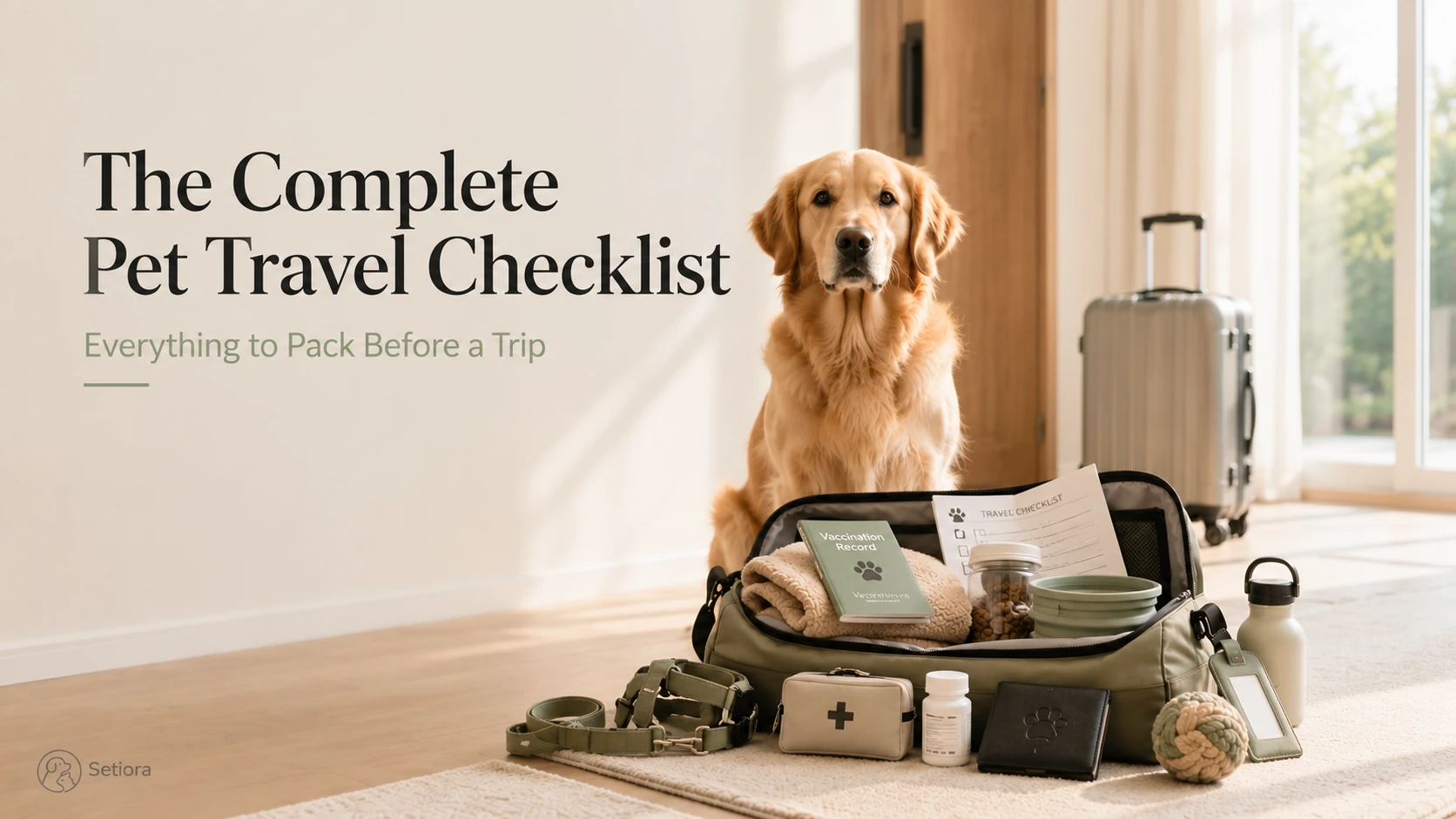
Whether you're heading out for a weekend getaway or a long holiday, traveling with your pet takes more preparation than simply packing their favorite toy. Forgetting medication, running out of food, or realizing you left vaccination records at home can quickly turn an enjoyable trip into a stressful experience.
The good news? A little planning goes a long way. This complete pet travel checklist covers everything you should prepare before leaving home, helping you travel confidently while keeping your pet healthy, comfortable, and safe.
1. Food & Water Essentials
A sudden change in diet can upset your pet's stomach, especially during travel. Pack enough food for the entire trip, plus an extra day's supply in case of delays.
Don't forget:
- Daily food portions
- Treats
- Fresh drinking water
- Portable water bowl
- Collapsible food bowl
- Measuring scoop
- Favorite chew toys
Pro tip: Avoid switching food brands while traveling unless absolutely necessary.
2. Medications & Health Supplies
One forgotten medication can become a serious issue if you're far from home. Prepare all medications before your departure and keep them easily accessible — not buried inside your luggage.
Include:
- Daily medications
- Flea and tick prevention
- Prescription food (if applicable)
- First-aid kit
- Bandages
- Antiseptic wipes
- Thermometer
- Tick remover
- Eye or ear medications
- Vet-prescribed supplements
If your pet requires medication at specific times, set reminders before your trip begins. Our guide to pet medication reminders covers simple ways to stay on schedule when your routine is disrupted.
3. Important Travel Documents
Many hotels, airlines, boarding facilities, and even some parks require proof of vaccination. Store both printed and digital copies whenever possible.
Essential documents:
- Vaccination records
- Health certificate (if required)
- Microchip information
- Pet insurance details
- Recent medical history
- Prescription copies
- Adoption or ownership papers (if needed)
Keeping digital copies on your phone can save valuable time in an emergency.
4. Identification & Safety
Pets can become disoriented in unfamiliar places. Proper identification significantly increases the chances of being reunited if they get lost.
Check before leaving:
- Collar fits properly
- ID tag is readable
- Phone number is current
- Microchip registration is up to date
- Recent photo of your pet saved on your phone
5. Comfort Items
Travel can be stressful, especially for younger or anxious pets. Bringing familiar items helps reduce anxiety and makes new environments feel more comfortable.
Pack:
- Favorite blanket
- Bed
- Toys
- Chews
- Grooming brush
- Towel
- Waste bags
- Litter and litter tray (for cats)
6. Emergency Information
Hope you never need it — but prepare anyway. Research nearby veterinary clinics before arriving at your destination.
Save:
- Local emergency veterinary hospital
- Your regular veterinarian's number
- Emergency family contacts
- Pet poison helpline (where available)
Having this information ready can save valuable minutes during an emergency. If you haven't built one yet, our pet emergency folder checklist walks through what to keep on hand year-round, not just while traveling.
7. Before You Leave Home
Take a few minutes to prepare your pet before walking out the door.
- Take your dog for a longer walk
- Feed your pet at the usual time
- Allow time for bathroom breaks
- Check that medication has been packed
- Verify collars and tags
- Double-check travel documents
8. During the Journey
Whether you're traveling by car, train, or plane, your pet's safety should always come first.
Car Travel Tips
- Use a crash-tested pet harness or secured carrier
- Never allow pets to ride on the driver's lap
- Take breaks every 2–3 hours
- Offer water regularly
- Never leave your pet alone inside a parked vehicle
Air Travel Tips
- Confirm airline pet policies well in advance
- Use an airline-approved carrier
- Label the carrier with contact information
- Carry essential medications in your hand luggage
9. After You Arrive
Your pet may need some time to adjust to a new environment. Help them settle in by maintaining familiar routines.
- Feed meals at the usual times
- Provide fresh water immediately
- Let them explore safely
- Keep walks shorter initially
- Watch for signs of stress or dehydration
Printable Pet Travel Checklist
Food
- Food
- Treats
- Water
- Bowls
Health
- Medications
- First-aid kit
- Prescription food
Documents
- Vaccination records
- Insurance
- Health certificate
- Microchip details
Safety
- Collar
- ID tag
- Carrier
- Leash
Comfort
- Blanket
- Toys
- Bed
- Waste bags
Emergency
- Vet contacts
- Emergency clinic
- Family contact
Common Mistakes Pet Owners Make Before Traveling
Even experienced pet owners occasionally overlook important details. Some of the most common mistakes include:
- Running out of food during the trip
- Forgetting medications
- Traveling without vaccination records
- Using an outdated ID tag
- Not researching nearby veterinary clinics
- Forgetting daily care routines
- Packing everything except the essentials
A quick checklist before every trip helps prevent these avoidable problems.
Make Every Trip Less Stressful
Preparing for a trip shouldn't mean trying to remember dozens of small details. Keeping your pet's medical records, vaccination history, medications, reminders, emergency contacts, and important documents organized in one place makes travel significantly easier — whether you're heading out for a weekend road trip or a longer vacation.
With Setiora, you can keep all your pet's essential information together, so it's available whenever and wherever you need it. Before your next trip, you'll know exactly what needs attention instead of wondering what you might have forgotten.
Because great trips start long before you leave home.
Frequently Asked Questions
What should I pack for my dog when traveling?
Pack food, water, bowls, medications, vaccination records, ID tags, leash, toys, bedding, waste bags, and emergency contact information.
Do I need my pet's vaccination records when traveling?
Yes. Many hotels, boarding facilities, airlines, and international destinations require proof of current vaccinations.
How much food should I bring for my pet?
Bring enough for the entire trip, plus one or two extra days in case of travel delays.
Should I update my pet's microchip before traveling?
Absolutely. Make sure the contact information linked to the microchip is current before leaving home.
Is it safe to give pets new food while traveling?
It's generally best to avoid changing diets during travel, as it can cause digestive upset. Stick to your pet's regular food whenever possible.
Track your pet's health with Setiora
Log vaccinations, medications, weight, and vet visits — all offline, all organised.
Join Waitlist →