
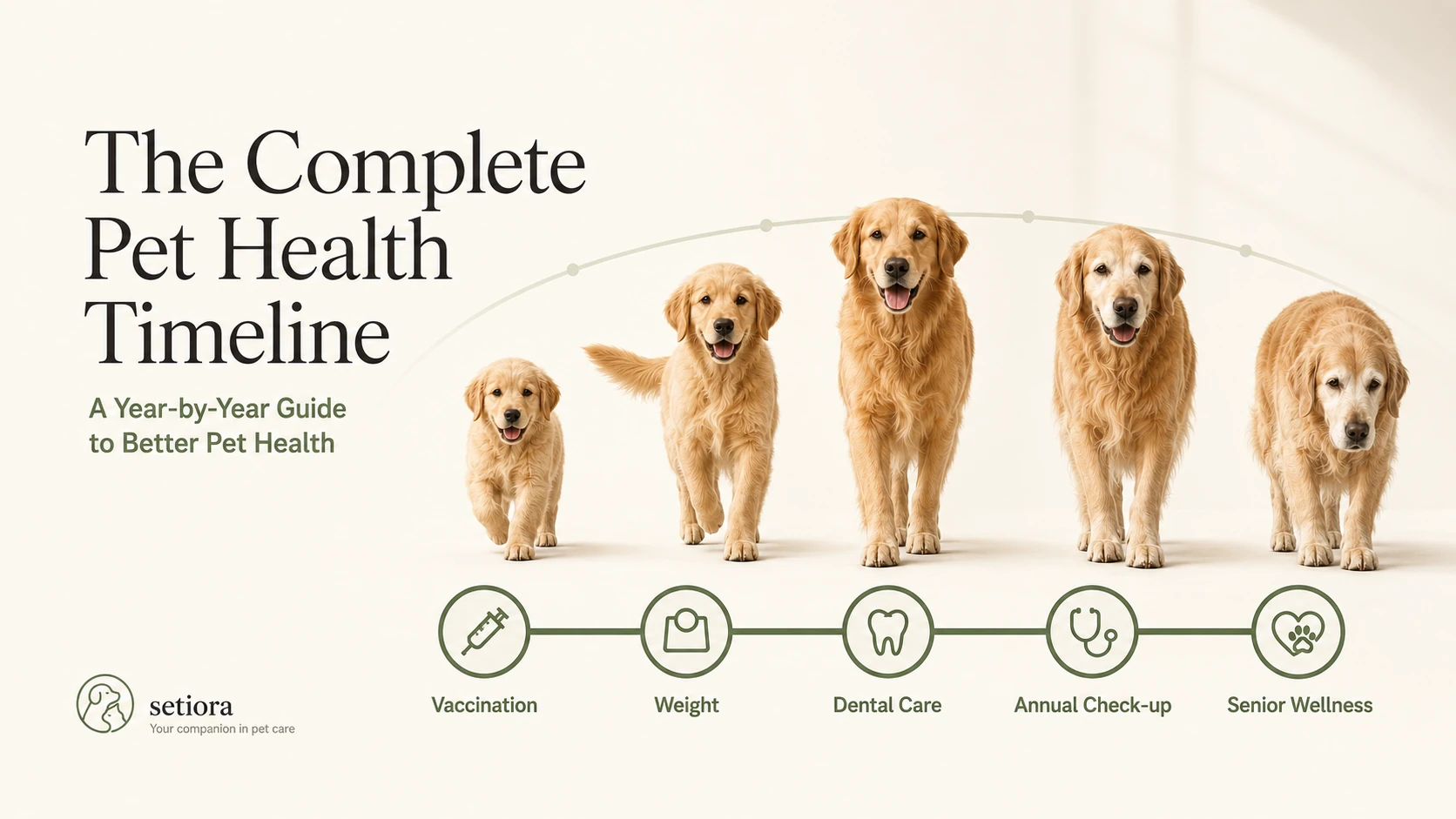
When we bring a pet home, it's easy to focus on the milestones we can see — first walks, birthdays, new tricks, and endless photos.
What often goes unnoticed are the gradual health changes happening beneath the surface.
A playful puppy eventually becomes a calm adult. An energetic cat begins sleeping a little longer. A senior dog may take an extra moment to climb the stairs.
These changes rarely happen overnight. They happen slowly, making them easy to overlook.
Understanding what to expect at every stage of your pet's life helps you recognize normal aging, spot potential problems earlier, and provide the care they need when they need it most.
Whether you share your home with a dog, cat, rabbit, or another companion animal, this guide will help you understand how your pet's healthcare priorities evolve over time.
Stage 1: Puppy or Kitten (Birth to 12 Months)
This is the fastest period of growth your pet will ever experience.
Every month brings physical, behavioural, and developmental changes.
Health priorities
- Vaccinations
- Deworming
- Flea and tick prevention
- Healthy growth
- Nutrition
- Socialisation
- Microchipping
- Spaying or neutering discussions
Regular veterinary visits during this stage help establish a strong foundation for lifelong health.
Weight monitoring is particularly important. Young animals should grow steadily — not too quickly and not too slowly.
Watch for
- Poor weight gain
- Persistent diarrhea or vomiting
- Lack of appetite
- Low energy
- Difficulty walking
- Excessive scratching
- Breathing difficulties
Early intervention often prevents small problems from becoming lifelong health issues.
Helpful records to keep
- Vaccination dates
- Weight measurements
- Growth photos
- Deworming schedule
- Vet visit summaries
- Feeding routine
If you're just starting out, our puppy vaccination schedule guide breaks down the core vaccines and timing in detail.
Stage 2: Young Adult (1–3 Years)
Your pet is now physically mature and often appears perfectly healthy.
This is also when many owners become less consistent about tracking health because visits to the veterinarian become less frequent.
However, this stage is where healthy habits are established.
Health priorities
- Annual wellness examinations
- Weight management
- Dental care
- Regular exercise
- Parasite prevention
- Behaviour monitoring
- Balanced nutrition
Dental disease can begin surprisingly early, even in pets that seem healthy.
Maintaining an ideal body weight during these years also reduces the risk of arthritis, diabetes, and heart disease later in life.
Watch for
- Weight gain
- Bad breath
- Skin irritation
- Ear infections
- Changes in activity levels
- Digestive issues
Many of these conditions are easier to manage when identified early.
Helpful records to keep
- Annual health checks
- Dental treatments
- Medication history
- Weight trends
- Allergy information
Stage 3: Adult (4–7 Years)
Your pet may still look energetic, but subtle health changes often begin during adulthood.
This stage is less about treating illness and more about preventing it. Small patterns become more meaningful over time.
Health priorities
- Annual veterinary examinations
- Weight monitoring
- Dental cleaning
- Nutrition adjustments
- Exercise consistency
- Behaviour changes
- Preventive health screening
Even slight weight gain over several years can place additional stress on joints and internal organs.
Tracking changes rather than relying on memory becomes increasingly valuable.
Watch for
- Reduced stamina
- Difficulty jumping
- Increased thirst
- Appetite changes
- Recurring skin problems
- Reduced interest in play
Many chronic conditions begin gradually during adulthood.
Stage 4: Mature (7–10 Years)
The definition of "mature" varies by breed.
Large dogs often reach this stage earlier than smaller breeds, while cats may remain active for longer.
Even if your pet seems healthy, age-related changes are becoming more common.
Health priorities
- Blood tests
- Urine screening
- Joint health
- Vision assessment
- Hearing evaluation
- Dental examinations
- Nutrition review
Many veterinarians recommend more comprehensive wellness testing during these years because diseases such as kidney disease, diabetes, and thyroid disorders can develop before obvious symptoms appear.
Watch for
- Stiffness after resting
- Slower walks
- Cloudy eyes
- Hearing loss
- Weight loss
- Sleeping more than usual
These changes aren't always "just old age." Many have effective treatments when detected early.
Helpful records to keep
- Blood test results
- Weight history
- Medication schedule
- Mobility notes
- Changes in appetite
- Water intake
Stage 5: Senior (10+ Years)
Senior pets deserve more attention — not because they're fragile, but because small changes matter more.
Many older pets continue living happy, active lives for years with proper care. Monitoring becomes just as important as treatment.
Health priorities
- Veterinary check-ups every six months
- Blood work
- Kidney monitoring
- Heart health
- Arthritis management
- Pain assessment
- Vision and hearing
- Medication management
Senior pets often benefit from routine health monitoring even when they appear comfortable.
Watch for
- Difficulty climbing stairs
- Limping
- Confusion
- Night-time restlessness
- Changes in drinking habits
- Weight loss
- New lumps
- Reduced appetite
Any significant change should be discussed with your veterinarian rather than assumed to be a normal part of aging.
Health Habits That Matter at Every Age
Regardless of whether your pet is six months or sixteen years old, some habits always remain important.
Keep track of:
- Weight
- Vaccinations
- Medications
- Parasite prevention
- Veterinary visits
- Allergies
- Behaviour changes
- Appetite
- Water intake
- Exercise
- Photos of visible changes
- Medical documents
Having this information organised makes veterinary visits more productive and helps identify gradual trends that would otherwise be easy to miss. Our guide to building a pet health timeline walks through exactly what to record and why.
Why Tracking Over Time Matters
Most health conditions don't begin with dramatic symptoms.
Instead, they often start with small changes:
- Drinking slightly more water
- Sleeping a little longer
- Losing a few hundred grams
- Walking slightly slower
- Missing an occasional meal
Individually, these changes may seem insignificant.
Over months — or years — they can reveal an important story.
Keeping a simple record of your pet's health allows you to notice those patterns earlier and provide your veterinarian with valuable context when something changes.
Final Thoughts
Your pet's needs won't stay the same throughout their life — and that's completely normal.
By understanding what to expect during each life stage, you can focus on the right health priorities, recognise potential concerns earlier, and make informed decisions alongside your veterinarian.
The goal isn't to remember every vaccination, every weight check, or every medication by memory.
It's to build a clear, consistent picture of your pet's health over time.
Every record, every reminder, and every observation becomes part of a story that helps your companion live a longer, healthier, and happier life.
Frequently Asked Questions
At what age is a dog considered a senior?
It depends on the breed. According to AAHA Canine Life Stage Guidelines, large breeds often become seniors around 6–8 years of age, while small breeds may not reach senior status until 10–12 years.
At what age is a cat considered a senior?
Most cats are considered senior at around 10–11 years of age, although many remain healthy and active well beyond this stage.
How often should adult pets visit the veterinarian?
Healthy adult pets generally benefit from a wellness examination once a year. Senior pets are often recommended to have check-ups every six months, but your veterinarian may suggest a different schedule based on your pet's health.
Is weight tracking really important?
Yes. Gradual weight gain or weight loss can be one of the earliest indicators of health issues such as arthritis, diabetes, thyroid disease, kidney disease, or nutritional problems.
Should I keep copies of my pet's medical records?
Absolutely. Keeping vaccination records, laboratory results, medications, and treatment history organised makes future veterinary visits easier and provides valuable information during emergencies.
Sources
Life-stage timing and health priorities above reflect guidance from:
Life stages vary by breed, size, and individual health — talk to your veterinarian about what applies to your pet.
Not veterinary advice
This article is for general educational purposes only and isn't a substitute for individualized guidance from a licensed veterinarian. Always consult your vet before starting, changing, or stopping any vaccination, medication, or treatment for your pet, and seek immediate veterinary or emergency care for urgent symptoms.
Track your pet's health with Setiora
Log vaccinations, medications, weight, and vet visits — all offline, all organised.
Join Waitlist →