
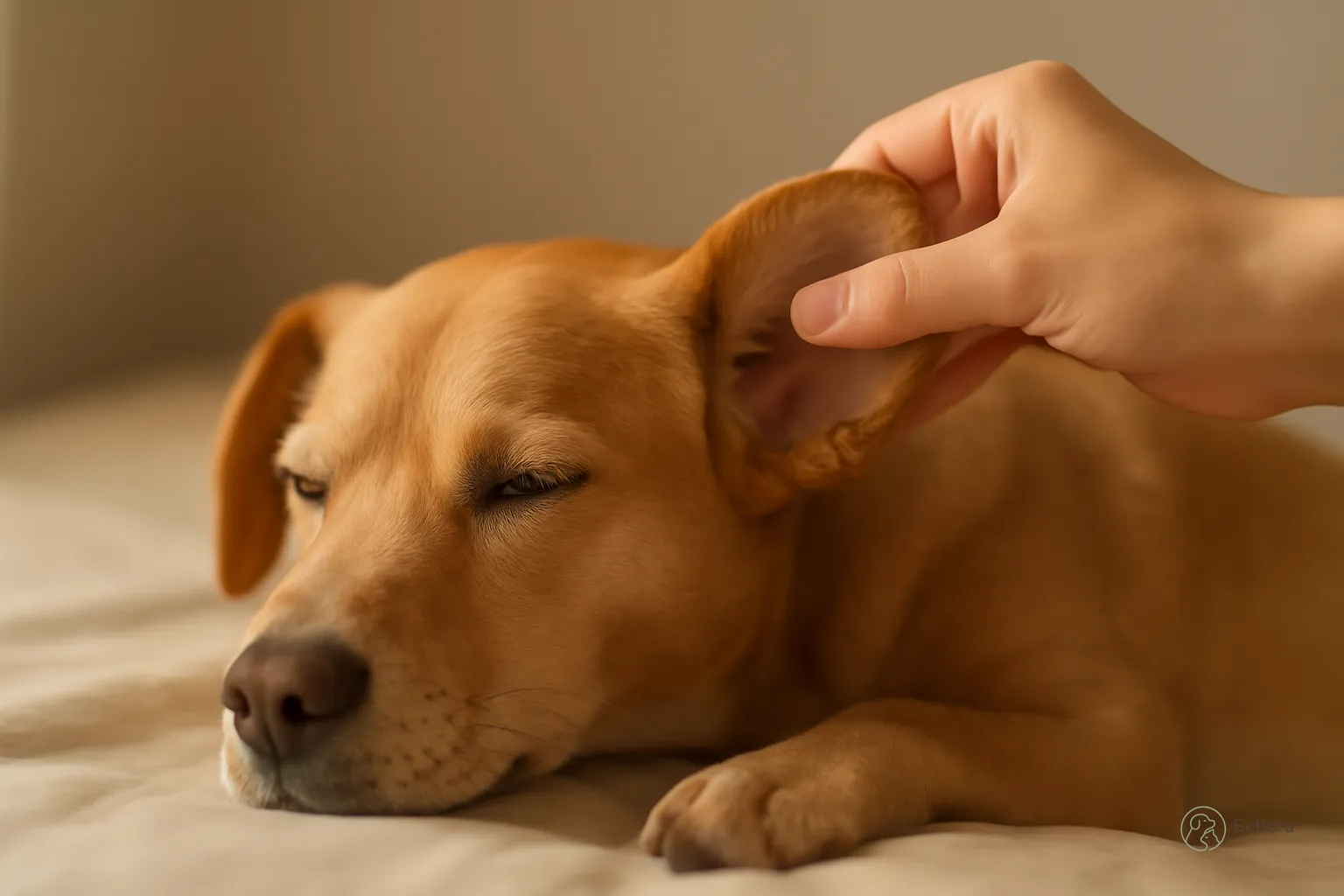
Your dog starts shaking their head during dinner. Then comes the scratching, the smell, and the sudden reluctance to let you touch one ear. Ear problems can appear quickly, and they can be surprisingly painful.
Knowing the most common dog ear infection symptoms helps you notice changes early and get the right care before a minor outer-ear problem becomes more serious.
What Is a Dog Ear Infection?
A dog ear infection, often called otitis, is inflammation or infection in part of the ear. The most common type affects the outer ear canal, known as otitis externa. Infections can also affect the middle ear, or otitis media, and the inner ear, or otitis interna.
Possible causes include:
- Bacterial overgrowth
- Yeast overgrowth
- Ear mites, especially in puppies or stray and shelter dogs
- Allergies to food or environmental triggers
- Moisture trapped after swimming or bathing
- Foreign objects, such as grass seeds
- Long hair or narrow ear canals
- Floppy ear anatomy
- Endocrine conditions, including hypothyroidism
The cause matters because treatment for yeast, bacteria, mites, allergies, and deeper ear disease can be very different. Only a veterinary examination and appropriate testing can identify what is happening.
If your dog has repeated ear problems, keeping a clear medical history can help your vet find underlying causes — Setiora's Pet Health Timeline Every Owner Should Keep is one way to organize past infections, treatments, and test results so patterns are easier to spot.
Dog Ear Infection Symptoms to Watch For
Some signs are easy to notice. Others are subtle, especially in the early stages.
1. Scratching or Pawing at the Ear
A dog may scratch repeatedly at one ear, rub the side of their face against furniture, or drag their head along the carpet. They may also hold one ear differently from the other.
Scratching does not always mean an infection. Allergies, fleas, dry skin, and other irritants can cause similar behavior. However, frequent or worsening scratching deserves attention.
If scratching is a recurring issue, consider whether an allergy or chronic skin condition could be driving repeat infections — our guide on Building a Pet Health Routine That Actually Sticks can help you set up consistent checks and records.
2. Head Shaking or Tilting
Repeated head shaking is one of the most recognizable dog ear infection signs. Your dog may shake their head after resting, during meals, or whenever the affected ear is touched.
A persistent head tilt is more concerning. It can indicate irritation or disease deeper in the ear, particularly when it occurs alongside balance problems, circling, or unusual eye movements.
3. Redness, Swelling, or Warmth
Gently lift the ear flap and look for:
- Red or inflamed skin
- Swelling inside the ear opening
- Warmth compared with the other ear
- Thickened skin
- Crusts or scabs
- A swollen ear flap
Stop if your dog seems painful. A swollen ear flap can sometimes develop when repeated head shaking or scratching damages small blood vessels.
4. Unusual Odor
A strong smell coming from the ear is another common symptom. Owners may describe it as yeasty, sour, rancid, or simply unlike the dog's normal scent.
Odor alone cannot tell you whether yeast, bacteria, or another problem is responsible. It is a reason to arrange an examination, not a reason to choose ear drops without guidance.
5. Ear Discharge or Debris
Discharge may appear:
- Brown or dark brown
- Yellow
- Black
- Thick and crumbly
- Moist or oily
- Bloody
Dark debris can occur with yeast or ear mites, while yellow or green discharge may occur with bacterial involvement. These appearances overlap, so visual inspection cannot reliably identify the cause.
6. Pain or Sensitivity
Your dog may pull away when you touch the ear, resist having their head handled, whine, or become unusually irritable. Some dogs stop putting their head on your lap or avoid grooming around the ears.
Pain is a reason to contact your veterinarian promptly. Avoid forcing the ear open or inserting anything into the canal.
7. Changes in Hearing or Behavior
A dog with ear discomfort may seem distracted, less responsive to commands, or easier to startle. They may not react to sounds they usually notice.
Behavior changes can also include:
- Irritability
- Reduced activity
- Decreased appetite
- Hiding or withdrawing
- Trouble settling
- Reluctance to play
These changes do not prove an ear infection, but they can signal that your dog is uncomfortable or that the problem is progressing.
Less Obvious Symptoms and Deeper Ear Problems
An ear infection does not always look dramatic from the outside. Middle- or inner-ear disease may cause:
- Persistent head tilt
- Loss of balance
- Stumbling or walking in circles
- Falling or difficulty standing
- Nystagmus, or unusual side-to-side eye movements
- Vomiting
- Facial weakness or paralysis
These signs need prompt veterinary attention. Inner-ear problems can affect balance, while deeper inflammation may affect nearby nerves. Do not wait for visible discharge before seeking help.
When Should You See a Vet?
Contact your veterinarian if symptoms persist for more than a day or two, or sooner if your dog appears painful. Ear problems can worsen even when the outside of the ear looks relatively normal.
Arrange veterinary care promptly for:
- Repeated scratching or head shaking
- New odor or discharge
- Redness, swelling, or warmth
- Pain when the ear is touched
- Ongoing behavior or hearing changes
- Symptoms that keep returning
Seek urgent veterinary attention for:
- Severe or sudden pain
- Bloody discharge
- Major swelling of the ear flap
- Head tilt, circling, or loss of balance
- Vomiting or abnormal eye movements
- Facial drooping
- Fever, collapse, or marked lethargy
If you're preparing for a vet visit, a little organization makes the appointment smoother — our post on 10 Things Your Vet Wishes You'd Bring to Every Appointment includes a checklist that helps ensure you bring photos, medication lists, and recent notes about symptom timing.
Important: Never wait for an ear infection to become severe before asking for help. Earlier treatment is often simpler, particularly for outer-ear infections.
How Vets Diagnose Ear Infections
Your veterinarian will usually begin with a physical examination and a close look at the ear canal. An otoscope may be used to examine the canal and, when possible, the eardrum.
Common tests include:
- Cytology: A sample of ear debris is examined under a microscope for yeast, bacteria, or signs of mites.
- Culture and sensitivity: This may be recommended for recurrent infections or infections that do not respond as expected.
- Imaging: X-rays or advanced imaging such as CT may be considered when middle- or inner-ear disease is suspected.
- Additional screening: Allergy or endocrine testing may be helpful when infections are chronic or repeatedly return.
Testing helps your vet choose treatment based on what is actually present instead of guessing from the color or smell of the discharge.
Safe Home Checks and What to Avoid
You can monitor your dog's ears at home without trying to diagnose the problem.
Approach calmly and gently lift the ear flap. Look for redness, swelling, discharge, debris, or changes between the two ears. Notice any unusual odor. If your dog pulls away, cries, growls, or seems painful, stop the examination.
Until your dog is examined:
- Keep the ears dry
- Prevent scratching if your veterinarian has recommended a safe approach
- Note when symptoms began and whether they are getting worse
- Take a photo of visible discharge if it may help your vet compare changes
- Keep track of head shaking, appetite, behavior, and balance
Avoid:
- Putting cotton swabs, fingers, or other objects deep into the ear
- Using human ear drops
- Using alcohol, hydrogen peroxide, oils, or unproven home remedies
- Flushing an ear that may have a damaged eardrum
- Cleaning aggressively or repeatedly
- Reusing leftover medication from an earlier infection
Even products that helped before may be unsuitable for the current cause or unsafe if the eardrum is damaged.
Common Causes and Dogs at Higher Risk
Some dogs are more likely to develop ear disease because of their anatomy, lifestyle, or underlying health conditions.
Risk factors include:
- Floppy ears
- Narrow or hairy ear canals
- Frequent swimming
- Allergies
- Endocrine disease
- Repeated moisture exposure
- Chronic skin inflammation
Cocker Spaniels, Basset Hounds, Labrador Retrievers, and Poodles may be more prone to ear problems, although any dog can develop an infection. Puppies and shelter dogs can also be more likely to have ear mites or other parasite-related irritation.
Recurrent infections often point to an underlying cause. Repeating ear drops without investigating allergies, anatomy, parasites, or endocrine disease may only provide temporary relief.
Treatment and What to Expect
Treatment depends on the location and cause of the infection. For many outer-ear infections, a veterinarian may recommend topical medication containing an antimicrobial, antifungal, or anti-inflammatory ingredient. Deeper or more complicated infections may require oral medication, additional testing, or treatment directed at an underlying condition.
Your veterinarian may also clean the ears during the appointment or recommend a specific cleaning solution and schedule. Follow those instructions carefully. Overcleaning can irritate the ear and disturb its normal protective environment.
Many acute outer-ear infections improve with appropriate treatment. Chronic infections may take longer and require follow-up visits, allergy management, parasite treatment, or other long-term care. If symptoms are not improving as expected, contact your vet rather than changing the treatment yourself.
If your dog requires ongoing medication, Setiora's Pet Medication Reminders can help you stay on schedule so treatments are given consistently and effectively.
Common Misconceptions About Dog Ear Infections
“All ear scratching means an infection.”
Not necessarily. Allergies, fleas, dry skin, and other irritants can look similar. Testing is often needed to identify the cause.
“I can use human ear drops.”
Human medications may be harmful to dogs, particularly if the eardrum is damaged. Use only products recommended for your dog by a veterinarian.
“The ear looks fine, so there is no infection.”
Early infections or deeper ear disease may have few visible external signs. Behavior, balance, and hearing changes still matter.
“Daily cleaning prevents every infection.”
Overcleaning can cause irritation. Cleaning should follow veterinary guidance and your dog's specific needs.
“Only dirty ears get infected.”
A clean-looking ear can still develop an infection, especially in dogs with allergies or narrow ear canals.
Preventing Future Ear Problems
You cannot prevent every ear infection, but regular observation can help you spot changes early.
- Check your dog's ears during routine grooming.
- Dry the outer ear gently after swimming or bathing.
- Ask your groomer or veterinarian how to manage excess hair safely.
- Address allergies and skin disease with your veterinarian.
- Avoid introducing new ear products without guidance.
- Keep a record of previous infections, treatments, and test results.
- Schedule follow-up care for recurring symptoms.
Quick Dog Ear Health Checklist
Use this short checklist when monitoring your dog's ears:
- Scratching or pawing at the ear
- Frequent head shaking
- Head tilt or balance changes
- New or strong odor
- Redness, swelling, or warmth
- Visible discharge or debris
- Pain when the ear is touched
- Changes in hearing or behavior
- Vomiting, circling, or unusual eye movements
How Setiora Can Help
Ear symptoms are easy to forget when your day is busy, especially when they improve briefly and then return. Keeping notes about scratching, odor, discharge, medications, vet visits, and follow-up dates gives you a clearer picture of your dog's health over time.
Setiora helps you keep your pet's care information organized in one place, so you can record changes and bring useful details to your veterinarian. When an ear problem appears, having that history ready can make the next step feel much less uncertain.
The earlier you notice a change, the sooner your dog can get comfortable again.
Not veterinary advice
This article is for general educational purposes only and isn't a substitute for individualized guidance from a licensed veterinarian. Always consult your vet before starting, changing, or stopping any vaccination, medication, or treatment for your pet, and seek immediate veterinary or emergency care for urgent symptoms.
Track your pet's health with Setiora
Log vaccinations, medications, weight, and vet visits — all offline, all organised.
Join Waitlist →