
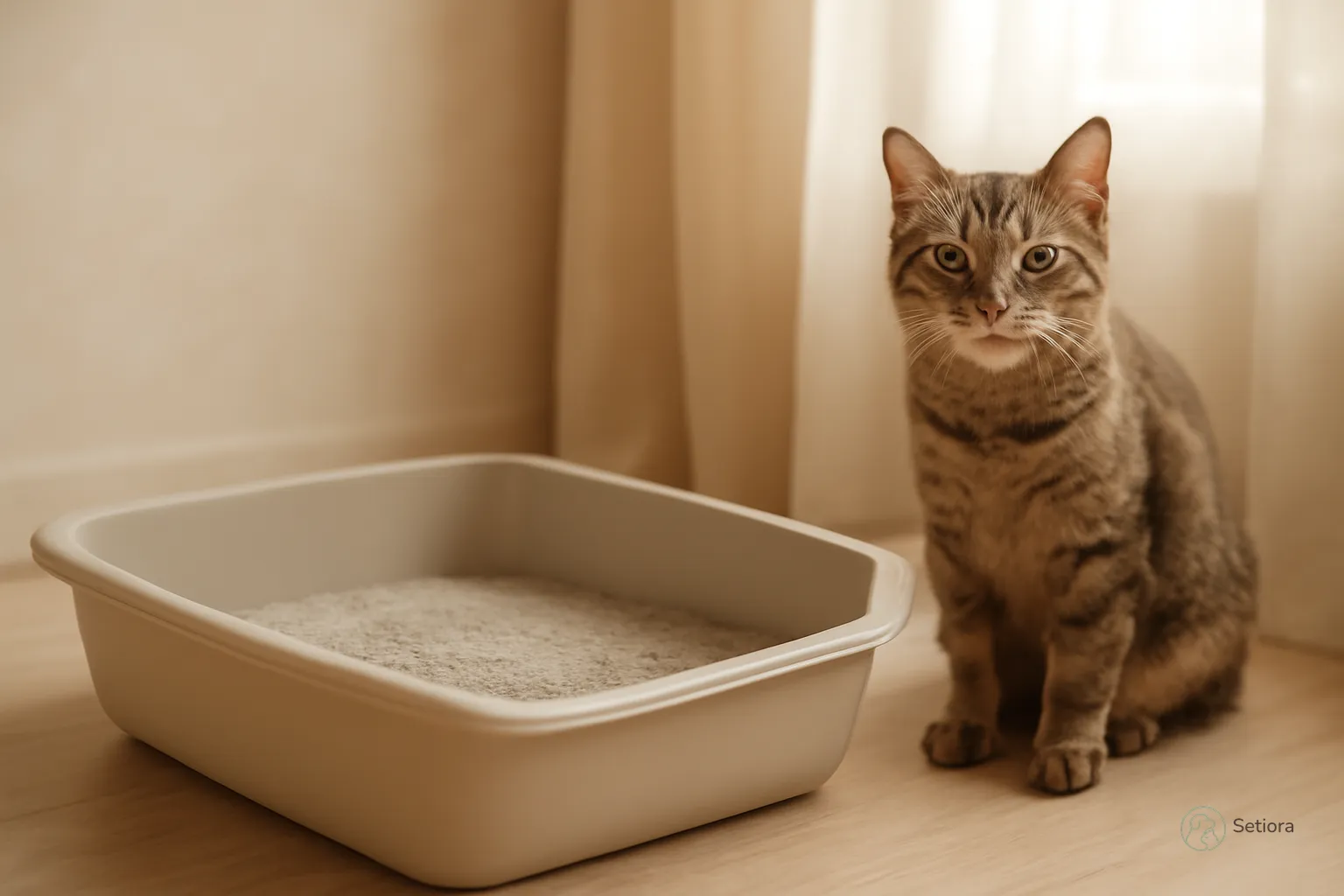
You walk past the litter box and notice it's been untouched. Then you find urine on the floor or waste tucked behind a piece of furniture. If your cat has used the box reliably for years, a sudden change can be confusing and frustrating.
When a cat stops using the litter box suddenly, don't assume they're being difficult. A new litter-box habit can signal pain, illness, stress, or a problem with the box itself. Medical causes should be ruled out first, especially when urination has changed.
Why Did My Cat Stop Using the Litter Box Suddenly?
Cats may avoid their litter box for several different reasons:
- Urinary tract disease or bladder discomfort
- Urinary obstruction, especially in male cats
- Kidney disease or diabetes
- Arthritis or other pain that makes the box difficult to enter
- Stress caused by changes at home
- Conflict with another cat
- An unpleasant litter, box, or location
- Territorial marking or spraying
The timing offers useful clues. A change that happens overnight may point to an acute medical problem or a sudden stressor. A gradual change may be linked to chronic pain, aging, or a learned preference for another location.
Important: Cats often hide illness. Eating normally or appearing fairly active does not rule out a medical cause.
Is It an Emergency if My Cat Stops Using the Litter Box?
Sometimes, yes. Urinary obstruction is a life-threatening emergency and is more common in male cats. A blocked cat may repeatedly enter the box, strain, cry, lick the genital area, or produce little or no urine.
Seek immediate veterinary care if your cat:
- Strains but cannot produce urine
- Makes repeated trips to the litter box
- Cries or appears distressed while urinating
- Has a painful, tense, or swollen abdomen
- Becomes weak, vomits, or suddenly stops eating
- Has blood in the urine along with discomfort or repeated attempts
Do not wait to see whether these signs improve on their own. A urinary blockage can worsen quickly.
Medical Causes to Rule Out First
When a cat is not using the litter box, the first step should generally be a veterinary examination. The exact testing depends on your cat's age, symptoms, and medical history, but your veterinarian may recommend:
- Physical examination
- Urinalysis
- Urine culture, if an infection is suspected
- Bloodwork
- X-rays or ultrasound when stones, crystals, or other problems are possible
Common medical causes include:
Urinary Tract Disease
Urinary tract infections and feline lower urinary tract disease, often called FLUTD, can make urination painful or urgent. A cat may begin associating the litter box with discomfort and avoid it, even after the original trigger changes.
Bladder stones and crystals can also irritate the urinary tract. In some cases, they contribute to a blockage.
Kidney Disease and Diabetes
Kidney disease and diabetes can change how often a cat urinates and how much urine they produce. A box that was previously adequate may become too dirty or difficult to reach between cleanings.
Increased thirst, larger urine clumps, weight loss, or changes in appetite deserve a veterinary conversation.
Pain and Mobility Problems
Arthritis can make climbing into a high-sided box painful. A cat may want to use the box but choose a nearby floor instead because it is easier to reach.
Older cats may also experience reduced mobility, vision changes, or cognitive decline. A low-entry box placed close to their favorite resting area can help, but new mobility or bathroom changes should still be checked by a veterinarian. If you're unsure how your cat's mobility or weight is changing, our guide on How to Track Your Cat's Weight at Home (And Why It Matters) shows simple ways to spot trends early.
Litter Box Problems That Can Trigger Avoidance
Sometimes the problem is the box rather than the cat. Review the setup from your cat's perspective.
Number of Boxes
A commonly recommended guideline is one box per cat, plus one extra. For example, a two-cat household would generally have three boxes.
The boxes should be distributed around the home rather than lined up together. This gives each cat options and reduces the chance that one cat can block access.
Box Size and Access
Many commercial boxes are too small for adult cats. Your cat should be able to enter, turn around, and squat comfortably without touching the sides.
Consider:
- A larger, uncovered box
- Low sides for older or arthritic cats
- A stable location that is easy to reach
- A ramp or shallow entry if jumping is difficult
Covered or Uncovered?
Covered boxes can contain odors, but they may also trap smells inside or make a cat feel cornered. Some cats prefer the privacy of a covered box, while others strongly prefer an uncovered one.
If your cat suddenly avoids a covered box, try offering an uncovered option beside it rather than assuming one style works for every cat.
Litter Type and Depth
Cats can be sensitive to texture, scent, and additives. A sudden switch to a new brand, a scented litter, or a different grain size may be enough to cause avoidance.
When possible:
- Use unscented litter
- Avoid abrupt changes
- Keep the litter depth fairly consistent
- Transition gradually by mixing old and new litter
- Offer different options in separate boxes if you are unsure of your cat's preference
Cleanliness and Location
Scoop boxes daily, or more often in a multi-cat home. Replace litter and clean the box on a regular schedule using products that do not leave a strong chemical smell.
Place boxes in quiet, accessible areas away from:
- Washing machines and loud appliances
- Heavy foot traffic
- Food and water bowls
- Doors that may suddenly open
- Locations where another cat can ambush or block access
Some cats also dislike liners or the noise and movement of automated boxes. If a new device appeared shortly before the problem, return to a simple box temporarily. For broader tips on building routines that stick around the house, see our piece on Building a Pet Health Routine That Actually Sticks.
Stress, Conflict, and Marking
Cats are sensitive to changes that may seem minor to you. Possible triggers include:
- A new pet, baby, guest, or roommate
- Moving furniture or relocating the litter box
- A change in your work schedule
- Construction or loud noises
- Outdoor cats visible through windows
- Tension between cats in the household
- A recent move or other unfamiliar environment
Cat Marking vs. Elimination
Spraying and urinating outside the box are related but different behaviors.
Spraying usually involves a small amount of urine on a vertical surface, with the cat standing and their tail raised or quivering. It is often connected to territorial communication.
Regular elimination usually involves squatting and a larger amount of urine on a horizontal surface. Pain, urgency, litter-box aversion, and stress are common possibilities.
Either behavior deserves attention. A veterinarian can help rule out medical causes before you focus on behavior.
Reducing Stress at Home
Make your cat's environment more predictable and give them choices.
- Provide separate food, water, resting, and litter areas
- Add hiding places and elevated perches
- Keep feeding and play times consistent
- Prevent one cat from guarding access to a box
- Introduce new pets gradually
- Close blinds if outdoor cats trigger repeated marking
- Use feline pheromone products as a support, not as the only solution
Punishment usually increases fear and stress. It does not teach a cat where you want them to eliminate.
A Practical Litter Box Troubleshooting Checklist
Work through these steps in order:
- Check for straining, repeated attempts, crying, or little to no urine
- Seek emergency veterinary care if urinary blockage may be possible
- Schedule a veterinary exam for any sudden or persistent change
- Count the boxes and aim for one per cat plus one extra
- Scoop each box daily
- Check whether the box is too small, covered, high-sided, or difficult to reach
- Review recent changes to litter, cleaners, liners, or automated boxes
- Return to the previous litter if a recent change came before the problem
- Add an uncovered, low-entry box in a quiet location
- Clean soiled areas with an enzymatic cleaner
- Separate resources if cats are competing or avoiding one another
- Keep a log of times, locations, urine or stool changes, and household events
An enzymatic cleaner helps remove odor cues that may encourage your cat to return to the same spot. Regular household cleaners may make an area look clean to you while leaving traces your cat can still detect.
What to Do If the Problem Continues
Some cats need a combination of medical treatment and environmental changes. If your veterinarian finds a health problem, follow the recommended treatment and continue monitoring litter-box habits.
If medical causes have been ruled out but the behavior continues:
- Keep the preferred box in the problem area temporarily
- Move it gradually once your cat is using it reliably
- Reward calm investigation and box use without forcing your cat inside
- Continue offering consistent litter and box options
- Address conflict between cats with separate resources and gradual reintroduction
- Ask your veterinarian about referral to a veterinary behaviorist
A behaviorist can be especially helpful when there is fear, aggression, persistent marking, or a complex multi-cat dynamic.
Preventing Future Litter Box Problems
A few habits can make sudden changes easier to prevent or spot early:
- Keep boxes clean and easy to access
- Maintain consistent litter and box types
- Make changes gradually over several days or weeks
- Keep at least one box per cat plus one extra
- Place boxes in quiet locations with more than one route in and out
- Watch older cats for stiffness, grooming changes, or difficulty jumping
- Track urine volume, stool habits, appetite, and water consumption
- Schedule regular checkups, particularly for senior cats or cats with urinary history
Small changes are worth noticing. A cat that begins making larger clumps, visits the box more often, or hesitates before entering may be showing an early sign of discomfort. Keeping a clear medical timeline and records can make vet visits and emergencies far easier — try our Pet Health Timeline Every Owner Should Keep to see which details are most useful to track.
Frequently Asked Questions
My male cat is straining. Should I wait?
No. If your cat is straining and producing little or no urine, seek immediate veterinary care. A urinary blockage can become life-threatening.
How many litter boxes do I need?
The general guideline is one box per cat, plus one extra. Spread them through the home so each cat has reliable access.
Should I punish my cat for peeing outside the box?
No. Punishment can increase anxiety and make avoidance worse. Focus on veterinary evaluation, cleaning, box access, and reducing stress.
Are spraying and urinating outside the box the same?
No. Spraying is usually territorial marking on a vertical surface, while regular elimination is typically performed on a horizontal surface. Both can have medical or stress-related contributors.
When should I contact a behaviorist?
Consider a veterinary behaviorist after medical causes have been ruled out and basic environmental changes have not helped. Seek help sooner when there is severe fear, aggression, or conflict between cats.
Helping You Notice Changes Sooner
Litter-box habits can reveal important changes in your cat's health and comfort, but it is easy to miss patterns when they happen gradually. Keeping health records, vet notes, reminders, and daily observations organized in one place can make those changes easier to recognize and explain during an appointment.
Setiora helps you keep your pet's care information together, so you can track what is normal for your cat and act sooner when something shifts. A cleaner record means less guesswork when your cat needs support. If you want a printable checklist to make sure you bring everything helpful to a vet visit, our article on 10 Things Your Vet Wishes You'd Bring to Every Appointment includes a downloadable checklist.
The most important first step is simple: treat a sudden litter-box change as information, not misbehavior. Rule out medical problems, make the box easier to use, and give your cat a calmer path back to a reliable routine.
Sources
For additional guidance, consult:
- American Veterinary Medical Association
- International Society of Feline Medicine
- American Association of Feline Practitioners
Individual cats can have very different needs. Your veterinarian can help determine which causes and solutions best fit your cat.
Not veterinary advice
This article is for general educational purposes only and isn't a substitute for individualized guidance from a licensed veterinarian. Always consult your vet before starting, changing, or stopping any vaccination, medication, or treatment for your pet, and seek immediate veterinary or emergency care for urgent symptoms.
Track your pet's health with Setiora
Log vaccinations, medications, weight, and vet visits — all offline, all organised.
Join Waitlist →